Stelo Pediatric Clearance Shows How FDA Separates Prescription and OTC Devices
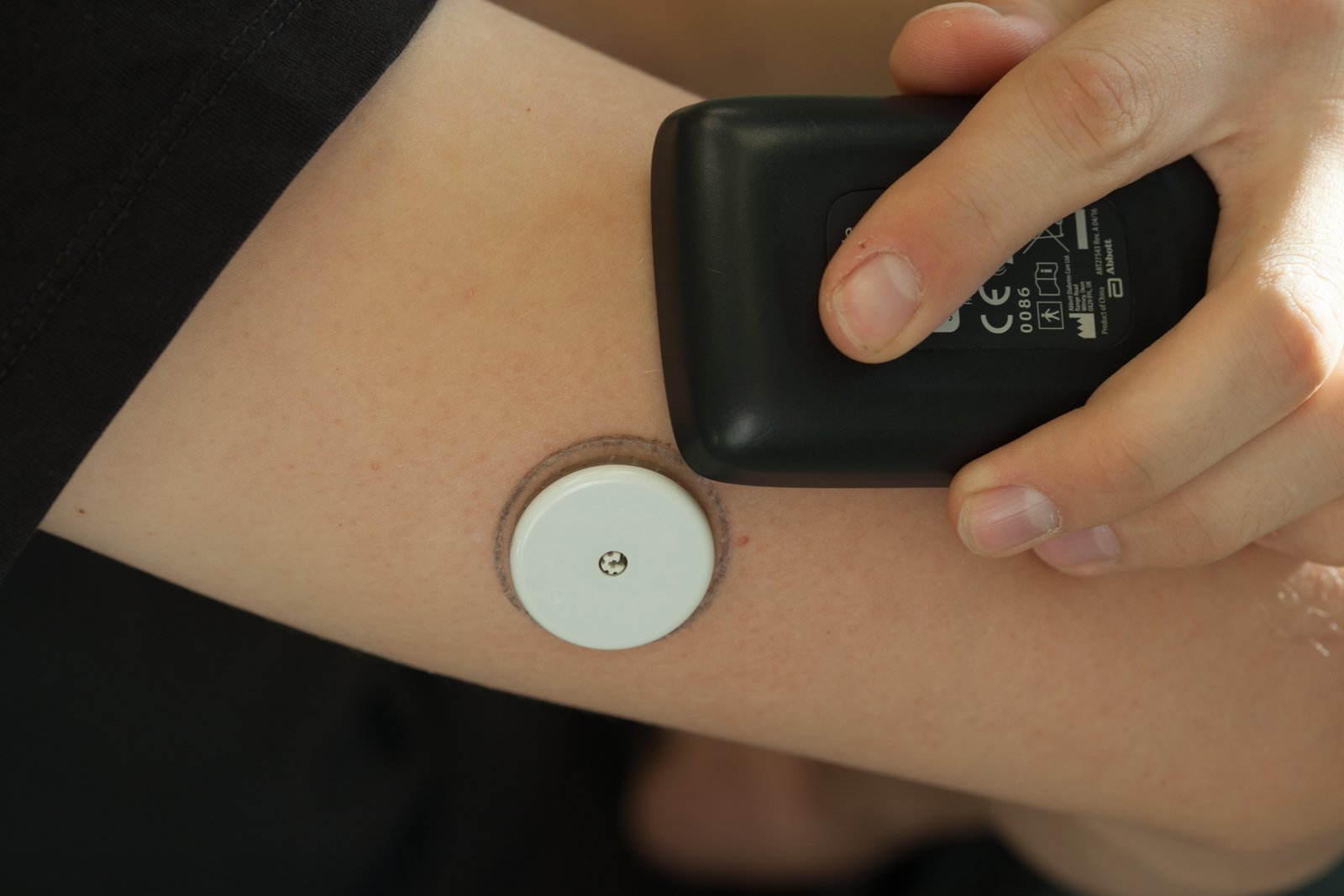
Dexcom's glucose sensor can now be sold without a prescription for children 2 and older, under labeling written for lay users and caregivers.

Key points
- FDA cleared Dexcom's Stelo system on June 12, 2026, as the first over-the-counter continuous glucose monitor for children, for people 2 and older who do not use insulin.
- Under 21 CFR 801.109, a device is prescription-only when it is not safe to use except under a licensed practitioner's supervision; its label must carry an 'Rx only' statement.
- FDA said the pediatric clearance drew on real-world evidence and that children should use the device under an adult caregiver's supervision.
FDA has cleared Dexcom's Stelo Glucose Biosensor System for over-the-counter use in people aged 2 and older who do not use insulin, the agency said on June 12, 2026, calling it the first over-the-counter continuous glucose monitor for children. FDA had cleared the same system for over-the-counter sale to adults 18 and older in March 2024.
The decision turns on a distinction that runs through device regulation: whether a product can be sold directly to the public, or only on the order of a licensed practitioner.
What makes a device prescription-only
Federal law requires every device to carry "adequate directions for use," which the regulations define as directions "under which the layman can use a device safely and for the purposes for which it is intended". A prescription device is one for which such directions cannot be written.
The prescription device rule, 21 CFR 801.109, covers a device that, because of its potential for harm, its method of use or the measures needed to use it, "is not safe except under the supervision of a practitioner licensed by law to direct the use of such device." Those devices are exempt from the lay-directions requirement if they meet several conditions. They must be sold only to or on the order of a practitioner, and their label must carry the statement "Rx only" or a caution that federal law restricts sale to, or on the order of, a practitioner. Their labeling must also give practitioners information on indications, hazards, contraindications and precautions.
A device cleared for over-the-counter use, by contrast, has to be labeled so that a lay user can operate it safely without that supervision.
How the Stelo labeling draws the line
FDA's announcements show how an over-the-counter label is bounded by who can use the device safely on their own. In 2024, FDA said the adult clearance allowed people "to purchase a CGM without the involvement of a health care provider." It also said the system was not for people with problematic hypoglycemia, because it "is not designed to alert the user" to low blood sugar.
The pediatric clearance keeps those limits and adds others. According to FDA, the system is indicated for children, including those with diabetes who take oral medication, and for people who want to understand how diet, exercise and other lifestyle changes affect their glucose. Children should use the device under the supervision of an adult caregiver, and a parent's or caregiver's phone can run the app. FDA said the system is not for people on dialysis, and that users and caregivers should consult a health care provider before adjusting any medication based on its readings.
The evidence behind the expansion
FDA described the clearance as an example of its use of real-world evidence. Dexcom and the agency combined earlier clinical study data from children and adults with real-world data on current integrated CGM use in both groups, to estimate how the device would perform in children over its full 15-day wear period. FDA noted that sensor wear time may be shorter in children than in adults.
Participants in the earlier study reported mild adverse events, including local infection, skin irritation and pain or discomfort, FDA said. The agency linked the clearance to its Home as a Health Care Hub initiative, which focuses on devices designed for use at home.
Sources
- FDA Clears First Over-the-Counter Continuous Glucose Monitor for Children, U.S. Food and Drug Administration, June 12, 2026
- FDA Clears First Over-the-Counter Continuous Glucose Monitor, U.S. Food and Drug Administration, March 5, 2024
- 21 CFR 801.109, Prescription devices (as of June 1, 2026), Electronic Code of Federal Regulations, June 1, 2026
- 21 CFR 801.5, Medical devices; adequate directions for use (as of June 1, 2026), Electronic Code of Federal Regulations, June 1, 2026