Siemens Contrast Mammography Clearance Shows How FDA Oversees Machine and Clinic
A premarket clearance covers the equipment; a separate 1992 law governs every facility that uses it, through accreditation, certification and annual inspection.
Key points
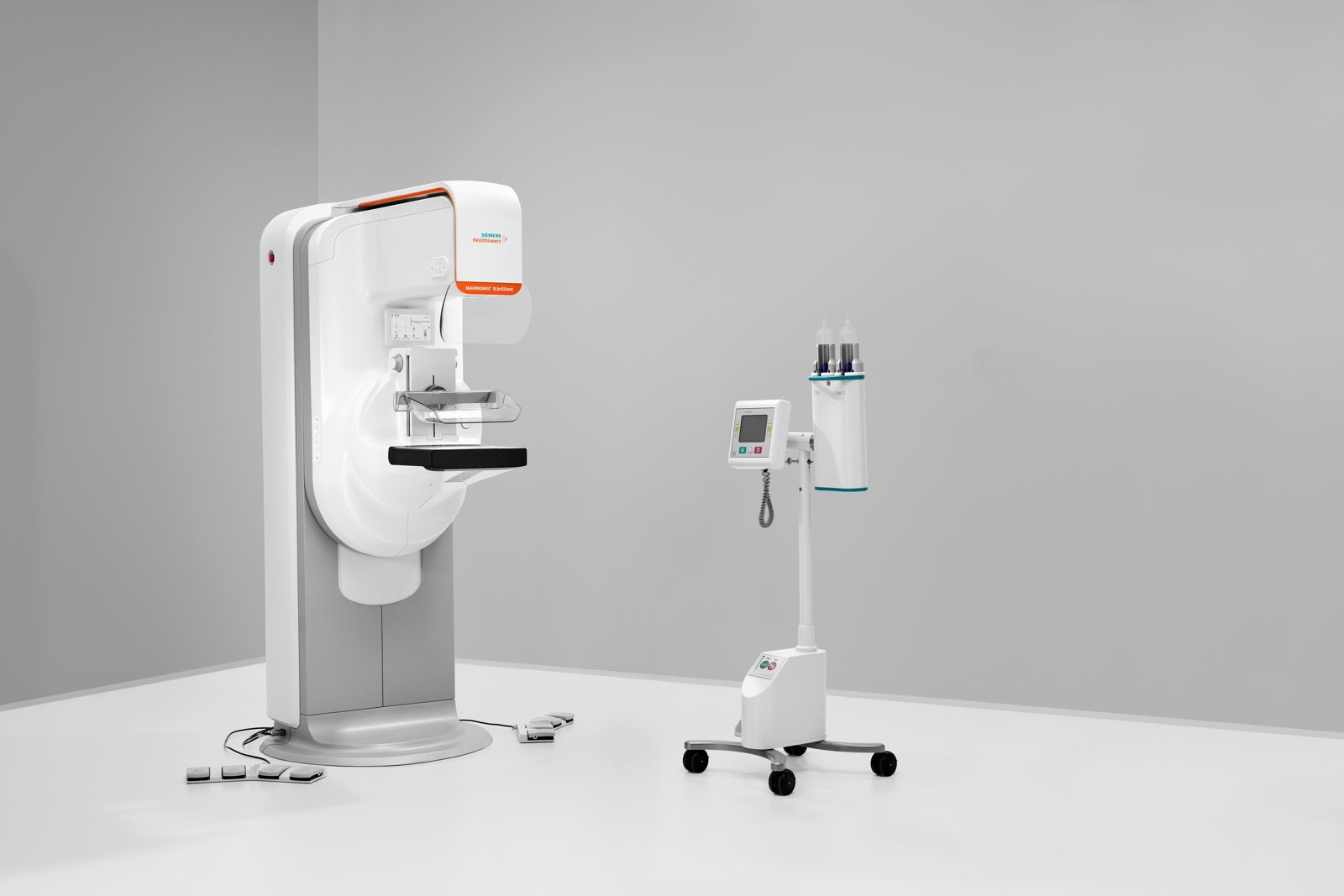
- Siemens Healthineers said on June 30, 2026, that FDA cleared contrast-enhanced mammography and contrast-enhanced biopsy capabilities for its Mammomat B.brilliant system.
- Under the Mammography Quality Standards Act, facilities need accreditation from an FDA-approved body and an MQSA certificate, valid for three years, and are inspected at least annually.
- A new mammography unit at a certified facility must pass a medical physicist's equipment evaluation and go through accreditation before it is used on patients.
FDA has cleared new contrast-enhanced mammography and contrast-enhanced biopsy capabilities for Siemens Healthineers' Mammomat B.brilliant mammography system, the company said in a June 30, 2026 release. Siemens described contrast-enhanced mammography as "an adjunct breast imaging technique" that measures differences in contrast uptake between healthy and malignant tissue, and said the system's new ClearCEM reconstruction technique suppresses image noise. Those performance descriptions are the company's.
A clearance like this covers the machine. Whether a clinic may use it on patients is governed by a separate federal law that applies to every mammography facility in the country.
Two layers of oversight
The first layer is premarket review of the equipment. FDA's compliance guide for mammography facilities says that before a mammography unit or a display monitor used to read the images can be marketed in the United States, "it must meet any applicable FDA premarket authorization requirements," and that a device cleared, granted or approved for mammography will say so in its indications for use.
The second layer is the Mammography Quality Standards Act of 1992, or MQSA. The guide says the law sets "uniform baseline Federal standards" so that patients nationwide have access to quality mammography. Its regulations, in 21 CFR Part 900, cover the qualifications of staff, standards for equipment, the content of mammography reports, quality assurance testing and clinical image quality.
Accreditation, certification and inspection
A facility needs both accreditation and certification to perform mammography. Accreditation comes from a body FDA has approved: the American College of Radiology, which serves nationwide, or certain state agencies for facilities in their states. Certification is then issued by FDA, or by a state FDA has approved as a certifier. According to the guide:
- A full MQSA certificate is valid for three years.
- A provisional certificate, which lets a new facility perform mammography while it gathers the clinical images needed for accreditation, is valid for up to six months. A facility that has not finished accreditation by then must stop performing mammography.
- Each facility location must be inspected at least annually by a certified MQSA inspector, who reviews equipment performance, quality assurance and quality control records, personnel qualifications and patient reports.
New equipment has its own step. In an already-certified facility, the guide says, a newly installed mammography unit can be used only after a qualified medical physicist has conducted a mammography equipment evaluation within six months before the unit's accreditation application, and the unit has gone through accreditation with the facility's accrediting body.
The 2023 update
FDA updated the MQSA regulations in a final rule issued on March 10, 2023, which took effect on Sept. 10, 2024. The guide says the rule requires the lay summary of a mammography report given to patients to state whether the patient has dense or non-dense breast tissue and to include a prescribed paragraph on what breast density means. It also set four categories for reporting breast density to the referring provider.
Sources
- Siemens Healthineers Receives FDA Clearance for Mammomat B.brilliant Contrast-Enhanced Mammography, Biopsy, Siemens Healthineers, June 30, 2026
- Mammography Quality Standards Act and Regulation Amendments: Small Entity Compliance Guide, U.S. Food and Drug Administration, August 26, 2024