FDA OTC Access Meeting Shows How Prescription Drugs Switch to Nonprescription
An April 23 public meeting on expanding over-the-counter access turned on the routes a drug can take off prescription, from the classic switch to a newer rule that allows an extra consumer step.

Key points
- FDA held a public meeting on April 23 with Duke-Margolis on increasing access to nonprescription drugs; comments are open until May 8 under docket FDA-2025-N-4731.
- A drug must stay prescription-only when it is not safe to use except under medical supervision; otherwise it can be sold over the counter through an approved application or an OTC monograph.
- Switch applications often rely on consumer studies, and a rule in effect since May 27, 2025 lets a sponsor add an extra step, such as a questionnaire, when the label alone is not enough.
The Food and Drug Administration held a public meeting on April 23 on how to make more drugs available without a prescription. The meeting, held in Washington with Duke-Margolis, was set to cover diseases not yet treated with nonprescription drugs where such drugs could be used safely and effectively, the challenges companies face in developing them, and opportunities for collaboration. FDA said making more drugs available over the counter "can decrease medication costs and improve access to important treatments." Written comments are due by May 8.
The discussion rests on a set of rules that decide which side of the pharmacy counter a drug belongs on, and how it can move.
The prescription line
FDA approves drugs as prescription or nonprescription under section 505 of the Federal Food, Drug, and Cosmetic Act, the meeting notice explains. A drug must be prescribed when it is not safe for use except under medical supervision because of its toxicity, potential for harmful effects, method of use or other measures needed for its use. A drug that does not meet those criteria may be marketed as nonprescription.
There are two main routes. One is an over-the-counter monograph, which sets the active ingredients, uses, doses, routes, labeling and testing that a drug in a category such as sunscreens or antacids must meet to be generally recognized as safe and effective; products that conform can be sold without an approved application. The other is a drug application. FDA's page on the application process for nonprescription drugs says a sponsor may seek approval to sell a new drug over the counter from the start, or to sell as nonprescription a drug first approved for prescription use. That second path is the switch.
What a switch has to show
The main difference from a prescription application, FDA says, is that consumer behavior studies are often needed to show people can use the drug safely and effectively without a health care provider. Label comprehension studies test whether consumers understand the Drug Facts label. Self-selection studies test whether they can apply it to their own situation and decide correctly whether the product is right for them. Actual use studies look at use under real-world conditions, and human factors studies examine the product's design for use-related hazards.
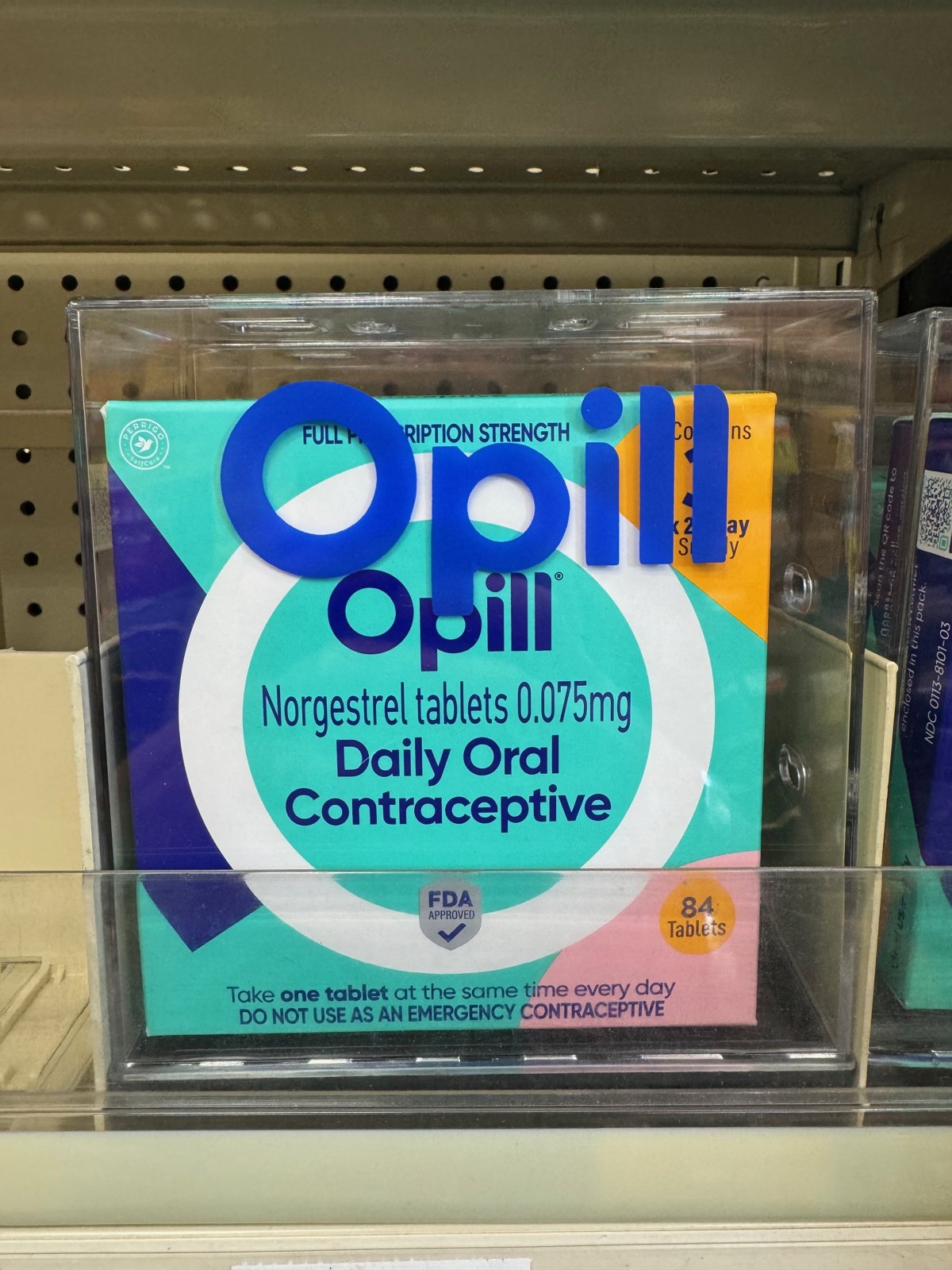
FDA keeps a list of switches, which can be full or partial, with their application numbers. Entries include Narcan naloxone nasal spray for opioid overdose, approved for nonprescription use on March 29, 2023, and Opill norgestrel tablets for prevention of pregnancy, on July 13, 2023. Earlier switches include allergy nasal sprays, acne gel and a heartburn medicine.
An extra step when a label is not enough
A nonprescription label normally has to carry everything a consumer needs to decide whether the drug suits them and to use it correctly. In December 2024 FDA finalized a rule creating a nonprescription drug product with an additional condition for nonprescription use, or ACNU. Under it, a consumer must complete an extra step before buying or using the drug; FDA gives a questionnaire as an example. A company may propose an ACNU when the label by itself cannot give consumers all the information they need. The rule took effect on May 27, 2025.
FDA has said it expects the rule to broaden the types of nonprescription drugs available, including some that now require a prescription and treat chronic diseases or conditions. The April 23 meeting was one of the agency's inputs on whether and how to go further: a request for information published in December 2025 drew comments that, FDA said, would inform the discussion, and the comment period reopened alongside the meeting.
Sources
- FDA Public Meeting on Increasing Access to Nonprescription Drugs, U.S. Food and Drug Administration, April 21, 2026
- Drug Application Process for Nonprescription Drugs (page as updated 2026-05-21; facts cited were in the earlier version), U.S. Food and Drug Administration
- Prescription to Nonprescription Switch List (page as updated 2026-06-16; facts cited were in the earlier version), U.S. Food and Drug Administration
- Nonprescription Drug Product with an Additional Condition for Nonprescription Use (page as updated 2026-08-13; facts cited were in the earlier version), U.S. Food and Drug Administration