Alpha Tau Filing Shows How a Modular PMA Reaches FDA in Pieces
Alpha Tau sent the first module of its Alpha DaRT application on January 5, using an FDA route that lets a high-risk device's file arrive in stages while its pivotal trial is still running.

Key points
- Alpha Tau said on January 5 that it had submitted the first, non-clinical module of a premarket approval (PMA) application for Alpha DaRT in recurrent cutaneous squamous cell carcinoma.
- In a modular PMA, the applicant and FDA first agree on a 'shell' that lists each module and its timing; FDA aims to review each module within 90 days.
- When the final module arrives, FDA converts the file into an original PMA, and the 180-day PMA review clock starts on the date the application became complete.
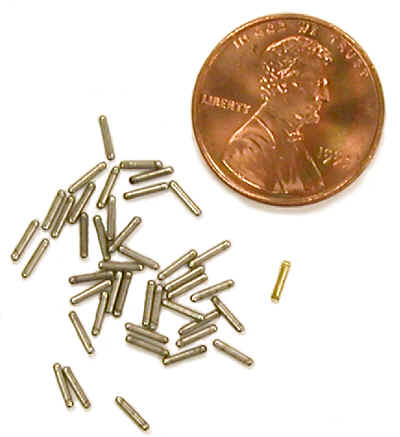
Alpha Tau Medical said on January 5 that it had submitted the first module of a premarket approval (PMA) application to the Food and Drug Administration for Alpha DaRT, its alpha-radiation implant, in recurrent cutaneous squamous cell carcinoma. The company's announcement, distributed by GlobeNewswire and read via BioSpace, said the module covers non-clinical studies and was filed while its pivotal ReSTART study is still enrolling, with recruitment expected to finish in the first quarter of 2026. The company said FDA had agreed to let it use "the more flexible modular approach."
The filing is a step in a process, not an FDA decision. It shows how a maker of a high-risk device can hand FDA its application in parts.
Traditional and modular PMAs
A PMA is the application a company files to win FDA approval of a high-risk, class III device; the first step of a modular review is confirming that the device belongs in class III, the guidance says. FDA's page on PMA application methods says the application runs to many volumes, covering device description and intended use, non-clinical and clinical studies, manufacturing methods and labeling. In the traditional method, the complete PMA is submitted at once, and FDA begins its review only when all of it has arrived, according to the agency's modular review guidance, last revised in January 2025.
In a modular PMA, the same contents are split into well-defined sections, such as non-clinical, clinical and manufacturing, and each is sent to FDA when it is finished. FDA introduced the approach in 1998, and the Medical Device User Fee and Modernization Act of 2002 wrote it into the Federal Food, Drug, and Cosmetic Act, the guidance says. Its stated purpose is to let applicants submit non-clinical data and manufacturing information "while still collecting, compiling, and analyzing the clinical data using the final device design."
FDA recommends the route for products in the early stages of clinical study. Its page says the method is not appropriate when the applicant is very close to submitting a full PMA, or when the device design "is in a state of flux or likely to change."
The shell and the 90-day module clock
The process begins with a "shell", an outline of the modules and what each will contain, with a projected submission date for each, which the applicant works out with the FDA review team. Once the finalized shell is formally submitted, FDA staff confirm it matches what was agreed and send an acceptance within 15 days, the guidance says. FDA may turn down a shell if the timing is wrong; for example, it may not be appropriate if the final module is six months or less away.
Modules should not arrive in quick succession. The guidance asks for at least 90 days between them, the time FDA aims to take to review each module and issue either a deficiency letter or an acceptance. A deficiency letter stops that module's clock until the company responds. Manufacturing information and Bioresearch Monitoring information, which concerns the conduct of the clinical study, go in separate modules unless they are part of the final clinical module. The PMA user fee is due when the first module is submitted, and FDA will not accept that module for review until it is paid.
If a company changes its device after a module has been accepted, it may have to amend the affected modules, which reopens them for review.
What the final module triggers
The last module carries the final clinical data, proposed labeling and the Summary of Safety and Effectiveness. On receipt, FDA converts the completed file into an original PMA and assigns it a PMA number. From there the review follows the traditional path: FDA generally decides within 15 days whether to accept the application and within 45 days whether to file it. If it is filed, the filing date is normally the day the final module arrived, and the 180-day PMA review clock under FDA's regulations starts on that date.
Alpha Tau said the device also holds breakthrough device designation in this indication. The company said it hopes the modular route will allow "ongoing FDA review and feedback as each module is submitted." Approval would still depend on FDA's review of the clinical module, which cannot be completed until the ReSTART data are in.
Sources
- Alpha Tau Submits First Pre-Market Approval Module to the FDA for Alpha DaRT for the Treatment of Recurrent Cutaneous Squamous Cell Carcinoma (cSCC) (GlobeNewswire release, read via BioSpace), Alpha Tau Medical, via BioSpace, January 5, 2026
- PMA Application Methods, U.S. Food and Drug Administration, January 13, 2025
- Premarket Approval Application and Humanitarian Device Exemption Modular Review: Guidance for Industry and FDA Staff, U.S. Food and Drug Administration, January 13, 2025