FDA Clears Zeta Surgical's Robotic System for Positioning TMS Coils
The Boston company's robot holds a transcranial magnetic stimulation coil on target and adjusts it as the patient moves, the company says.

The FDA cleared this device through the 510(k) pathway, which finds it substantially equivalent to a device already on the market. Clearance is not the same as approval.
Key points
- The FDA found Zeta Surgical's submission K261471 substantially equivalent on July 9, 2026; the company announced the clearance on July 10.
- The company says the robot positions TMS coils with submillimeter-level accuracy and adjusts for patient movement during a session.
- Zeta said accuracy and usability testing was done with Harvard Medical School and the University of Cambridge; it has not announced a launch date or pricing.
Zeta Surgical said on July 10 that the US Food and Drug Administration has cleared its Zeta TMS Robotic System, a device that moves and holds the magnetic coil used in transcranial magnetic stimulation (TMS) and adjusts its position as the patient moves, according to the Boston company's announcement.
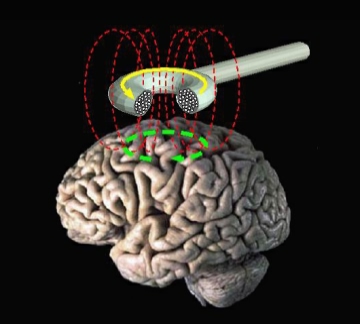
TMS is a non-invasive treatment in which a coil held against the head delivers magnetic pulses to targeted brain regions. The company's release describes it as used primarily for treatment-resistant depression, and says it is also being used in obsessive-compulsive disorder, PTSD and addiction disorders.
What the FDA record shows
The FDA's 510(k) database lists submission K261471 from Zeta Surgical, Inc. The agency received the submission on May 4, 2026, and issued a decision of substantially equivalent on July 9. The record lists the device name as Zeta TMS Navigation System and classifies it under regulation 882.5805, as an electromechanical arm for a transcranial magnetic stimulation system, with product code QFF and subsequent product code SGE. The record lists it as a special 510(k) reviewed by the neurology panel. The record shows the submission was not reviewed by a third party and that no predetermined change control plan was authorized.
Zeta's release describes the product as a Class II stereotaxic instrument under 21 CFR 882.4560 with the same two product codes and the same submission number.
How the company describes the robot
According to the company, the system positions TMS coils robotically in real time with submillimeter-level accuracy, tracks the patient's movement throughout a session and automatically adjusts the coil to keep stimulation on target. Zeta said the system can be set up in under a minute and used in "virtually any point-of-care environment." The company said accuracy and usability testing was conducted in collaboration with Harvard Medical School and the University of Cambridge. It did not publish the results of that testing in the release.
"It uses that same guidance to dynamically adjust position throughout a session, without asking clinics to change how they already work," Benjamin Lee, Zeta's chief product officer, said in the release, referring to the image guidance used in the company's existing TMS deployments.
William Gormley, a Zeta co-founder and a neurosurgeon at Mass General Brigham, said the clearance "brings operating-room-level navigation and robotic accuracy into a platform that can be rapidly deployed in virtually any clinic."
Medical Product Outsourcing, which reported the clearance on July 10, described the device as a Class II stereotactic instrument and noted that the company had earlier received FDA clearance for its Zeta navigation system and for its Zeta Stylet and Zeta Bolt navigated instruments.
Zeta did not give a launch date, pricing or the names of any clinics that will use the robotic system. The company's earlier announcements named HOPE Therapeutics in West Palm Beach, Florida, as a site for its TMS navigation system.
Sources
- Zeta TMS Robotic System Receives FDA 510(k) Clearance, Zeta Surgical, July 10, 2026
- 510(k) Premarket Notification K261471: Zeta TMS Navigation System, US Food and Drug Administration, July 9, 2026
- FDA OKs Zeta's Robotic, Stereotactic TMS System, Medical Product Outsourcing, July 10, 2026