FDA Clears TELA Bio's Liora, a Fully Resorbable Monofilament Scaffold
The 510(k) covers a PLGA surgical mesh indicated as temporary support in muscle flap procedures, the first implant TELA Bio says it developed entirely in-house.
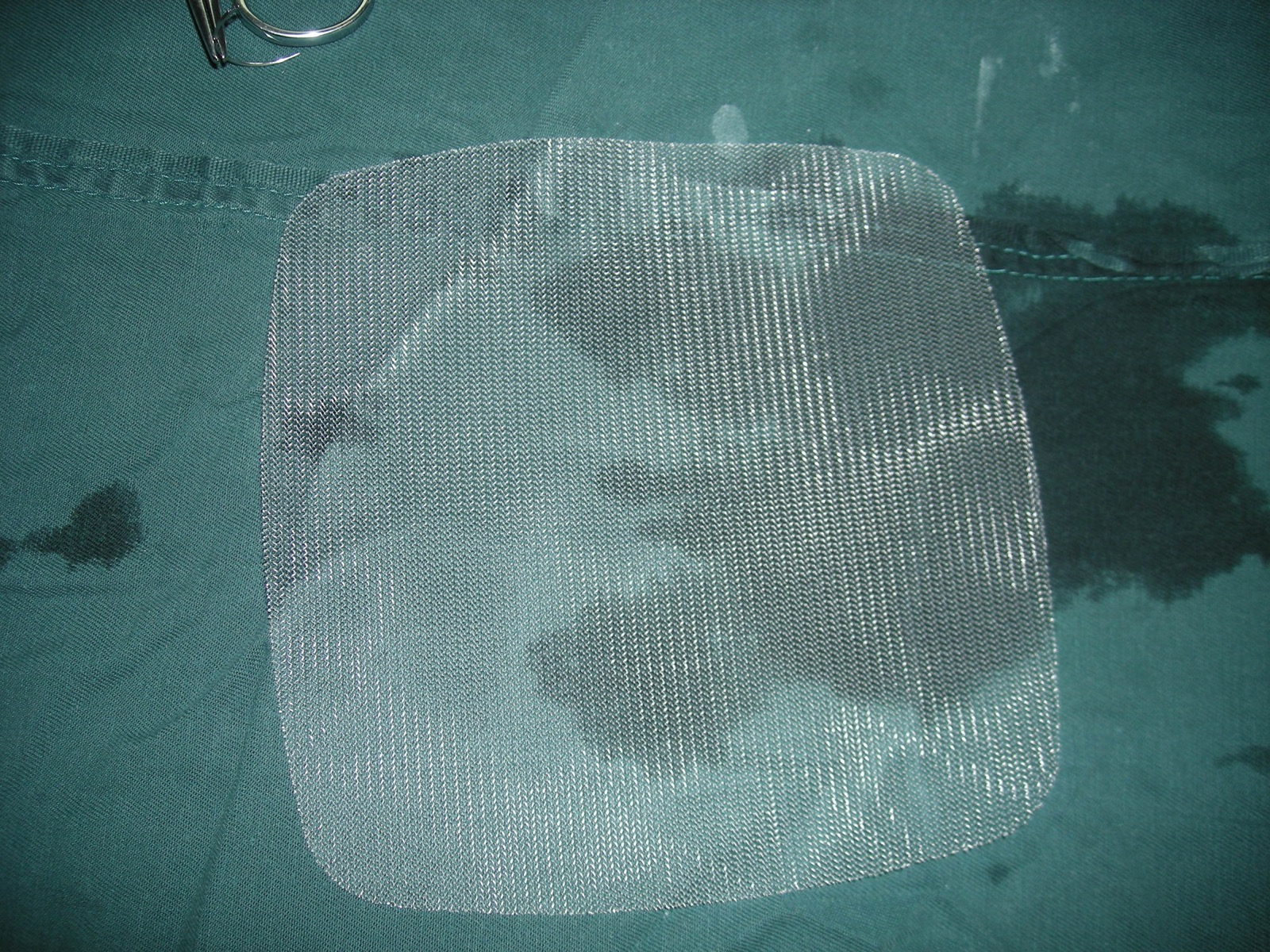

The FDA cleared this device through the 510(k) pathway, which finds it substantially equivalent to a device already on the market. Clearance is not the same as approval.
Key points
- The FDA found TELA Bio's Liora Monofilament Scaffold, submission K260474, substantially equivalent on September 28, 2026; the company announced the clearance on October 5.
- Liora is a 100% resorbable mesh made of poly(lactic-co-glycolic acid), indicated for soft tissue reinforcement and specifically for securing muscle flaps to defect sites.
- The FDA summary says clearance rested on bench, biocompatibility and animal testing, not on clinical performance data.
TELA Bio has received FDA 510(k) clearance for its Liora Monofilament Scaffold, a fully resorbable surgical mesh for soft tissue reinforcement, the Malvern, Pennsylvania, company announced on October 5 in a GlobeNewswire release, read here via its republication on Finviz.
The FDA's 510(k) database lists submission K260474 for the Liora Monofilament Scaffold from TELA Bio, Inc., with a decision of substantially equivalent dated September 28, 2026. The device is regulated as a Class II polymeric surgical mesh under 21 CFR 878.3300, product code FTL, and was reviewed by the general and plastic surgery panel as a traditional 510(k).
What was cleared
According to the clearance letter and 510(k) summary posted by the FDA, Liora is a sterile monofilament scaffold made entirely of poly(lactic-co-glycolic acid), or PLGA. It is indicated for soft tissue reinforcement where weakness exists, and specifically for muscle flap transfer procedures, where it serves as temporary support to help secure muscle flaps to defect sites. It is supplied in rectangle, contour and circle shapes up to a 750 square centimetre footprint and can be trimmed by the surgeon.
TELA Bio named Integra LifeSciences' Polydioxanone Surgical Scaffold (K181094) as the primary predicate. Two reference devices were used for comparison testing: TELA Bio's own OviTex PRS Long-Term Resorbable (K243595) and the TIGR Matrix (K191749).
The summary lists differences from the predicate in material, thickness, areal density and pore size. Liora is listed at 0.498 to 0.537 millimetres thick with an areal density of 43.0 to 54.0 grams per square metre, compared with 0.427 to 0.431 millimetres and 74.2 to 76.0 grams per square metre for the predicate. The document states that these differences "do not raise different questions of safety or effectiveness."
Testing behind the decision
The submission relied on nonclinical data: biocompatibility testing under ISO 10993-1, chemical characterization, tensile, stiffness, suture pullout, burst and tear testing run head-to-head against the predicate and reference devices, simulated use testing and in vivo implantation data. The summary states that "substantial equivalence was not based on an assessment of clinical performance data."
In vitro degradation testing showed that the predicate retains greater strength than Liora from implantation through about two months, according to the summary. Over that period, Liora's strength was equivalent to the implantation strength of the OviTex PRS reference device, and Liora retains its original strength for approximately three months based on in vitro degradation testing, the document says.
Company plans
TELA Bio said Liora is the first implant fully developed in its ISO 8 certified cleanroom in Malvern and that it will allow the company to expand its footprint in the soft tissue reconstruction market.
"FDA 510(k) clearance is a significant milestone for TELA Bio as Liora is the first fully resorbable synthetic product in our portfolio to be designed and produced in-house by our team of innovative engineers," said Heather Getz, the company's chief executive. "The addition of Liora to our portfolio expands the options available to surgeons and patients for their soft tissue reconstruction needs."
The company did not give launch timing or pricing in the release. It said it will provide more details on its third quarter earnings call, expected in early November.
Sources
- TELA Bio Announces 510(k) Clearance for Liora Monofilament Scaffold for Soft Tissue Reinforcement, TELA Bio press release (GlobeNewswire), via Finviz, October 5, 2026
- 510(k) Premarket Notification K260474: Liora Monofilament Scaffold, US Food and Drug Administration, September 28, 2026
- K260474 clearance letter and 510(k) summary, US Food and Drug Administration, September 28, 2026