FDA Clears SI-BONE's iFuse Granite Onyx for Spinal Fusion in Weak Bone
The 3D-printed pedicle screw system is SI-BONE's first compromised-bone product for use beyond the pelvis, aimed at loosening at the ends of fusion constructs.
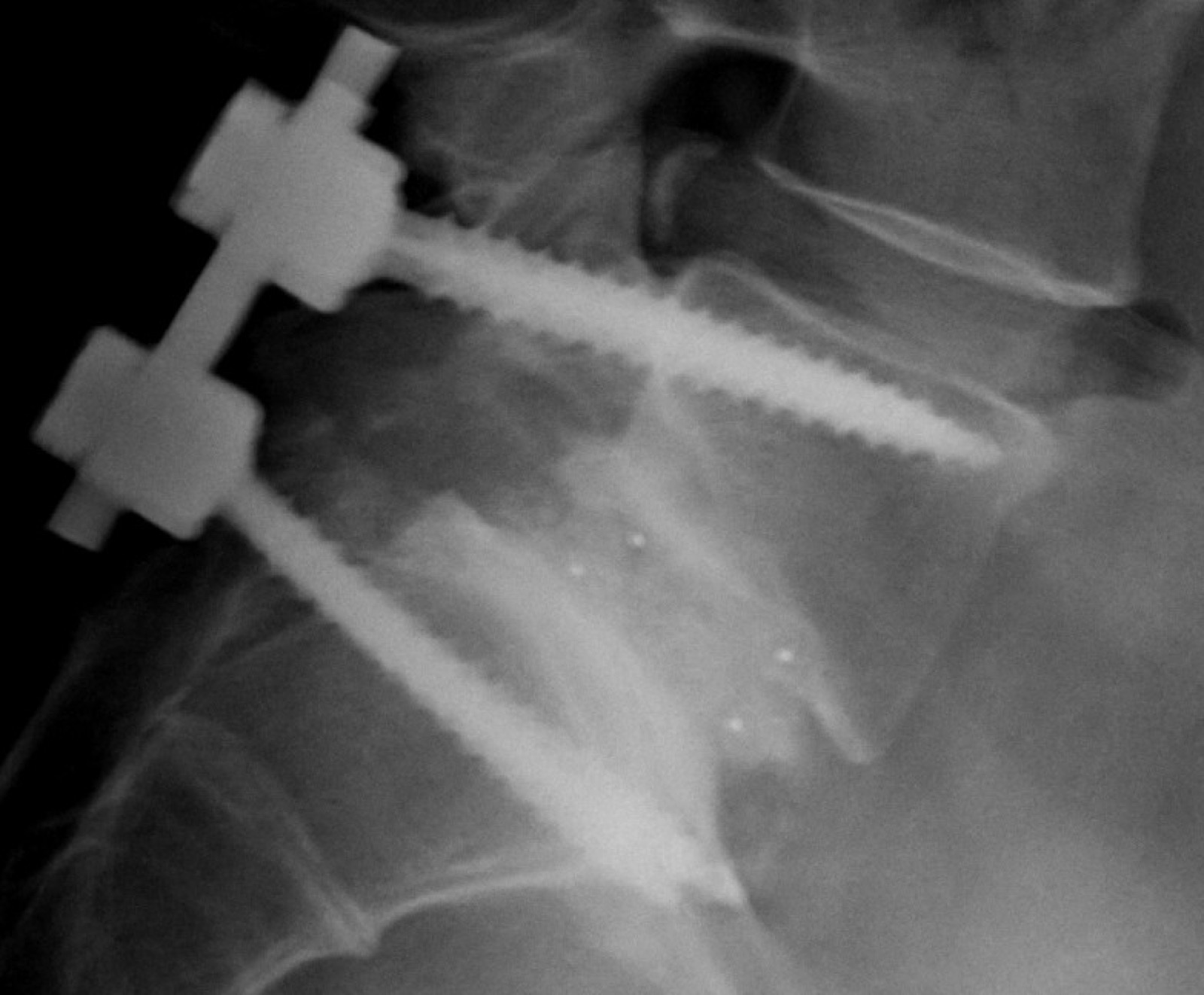

The FDA cleared this device through the 510(k) pathway, which finds it substantially equivalent to a device already on the market. Clearance is not the same as approval.
Key points
- The FDA found the iFuse Granite Onyx Implant System, K262067, substantially equivalent on September 23, 2026; SI-BONE announced the clearance on September 28.
- SI-BONE says the implant targets screw loosening at the upper and lower instrumented vertebrae, which it says occurs in up to 27% of fusion constructs.
- The company did not release clinical data for Onyx; two surgeons quoted in its announcement hold royalty interests in the device.
The FDA has cleared SI-BONE's iFuse Granite Onyx System, a 3D-printed implant meant to anchor the ends of a spinal fusion construct in patients with weak bone, the Santa Clara, California, company announced on September 28 in a GlobeNewswire release, read here via its republication on BioSpace.
The FDA's 510(k) database lists submission K262067 from SI-BONE, Inc. for the "iFuse Granite Onyx™ Implant System," received June 22, 2026, and found substantially equivalent on September 23. The device is classified as a thoracolumbosacral pedicle screw system under regulation 888.3070, product code NKB, with subsequent product code OLO, and was reviewed by the orthopedic panel as a traditional 510(k).
SI-BONE said Onyx is its first product for compromised bone intended for use outside the pelvis. iFuse Bedrock Granite, the company's first device to receive breakthrough device designation, is used at the base of multi-level constructs, and SI-BONE describes its existing technology platform as centered on the spinopelvic anatomy.
The problem the company is targeting
The company said Onyx is designed to address loosening at the upper and lower instrumented vertebrae, the top and bottom levels of a spinal fusion construct. According to the release, loosening at those levels occurs in as many as 27% of fusion constructs, and the risk is higher in patients with low bone density, contributing to higher revision rates and costs. SI-BONE cited three published studies for these figures.
Onyx is built with what SI-BONE calls a bone-density-specific surface and an anatomy-specific thread form. The company said the design is intended to allow rapid osseointegration, or bonding of bone to the implant, and to reduce micromotion, with the goal of early fixation and less screw loosening. The release did not include clinical results for Onyx.
Breakthrough device designation and surgeons' comments
"Onyx is our third platform designated as a breakthrough device that is addressing a known large unmet need in fusion procedures," said Laura Francis, SI-BONE's chief executive. She said the company expects Onyx to sell to surgeons already using its Granite implant and to "expand our reach to a broader group of surgeons who will want to incorporate this technology in their spinal fusion procedures."
Two surgeons quoted in the release, Han Jo Kim of the Hospital for Special Surgery and Gregory M. Mundis Jr. of Scripps Clinic, are paid consultants to SI-BONE and have royalty interests in Onyx, the company disclosed.
"Patients with poor bone quality have historically had limited options in spinal fixation, and they are the least able to tolerate a second operation should the fixation fail," Mundis said. "Onyx is designed around the mechanical realities of poor-quality bone, with a form factor intended to achieve early fixation where conventional technologies struggle."
Kim said screw loosening at the top and bottom of fusion constructs "is an unmet clinical need that has driven the search for a better solution."
SI-BONE did not give a launch date or pricing in the announcement. The company said it has supported more than 150,000 procedures since 2009.
Sources
- SI-BONE Receives FDA 510(k) Clearance for iFuse Granite Onyx, Extending Its Compromised Bone Franchise Beyond the Pelvis, SI-BONE press release (GlobeNewswire), via BioSpace, September 28, 2026
- 510(k) Premarket Notification K262067: iFuse Granite Onyx Implant System, US Food and Drug Administration, September 23, 2026