FDA Clears Hyalex Slalom Big-Toe Joint Implant for Hallux Rigidus
The hemiarthroplasty implant replaces part of the first metatarsal head with a polymer surface and is the Massachusetts startup's first product cleared for the US market.
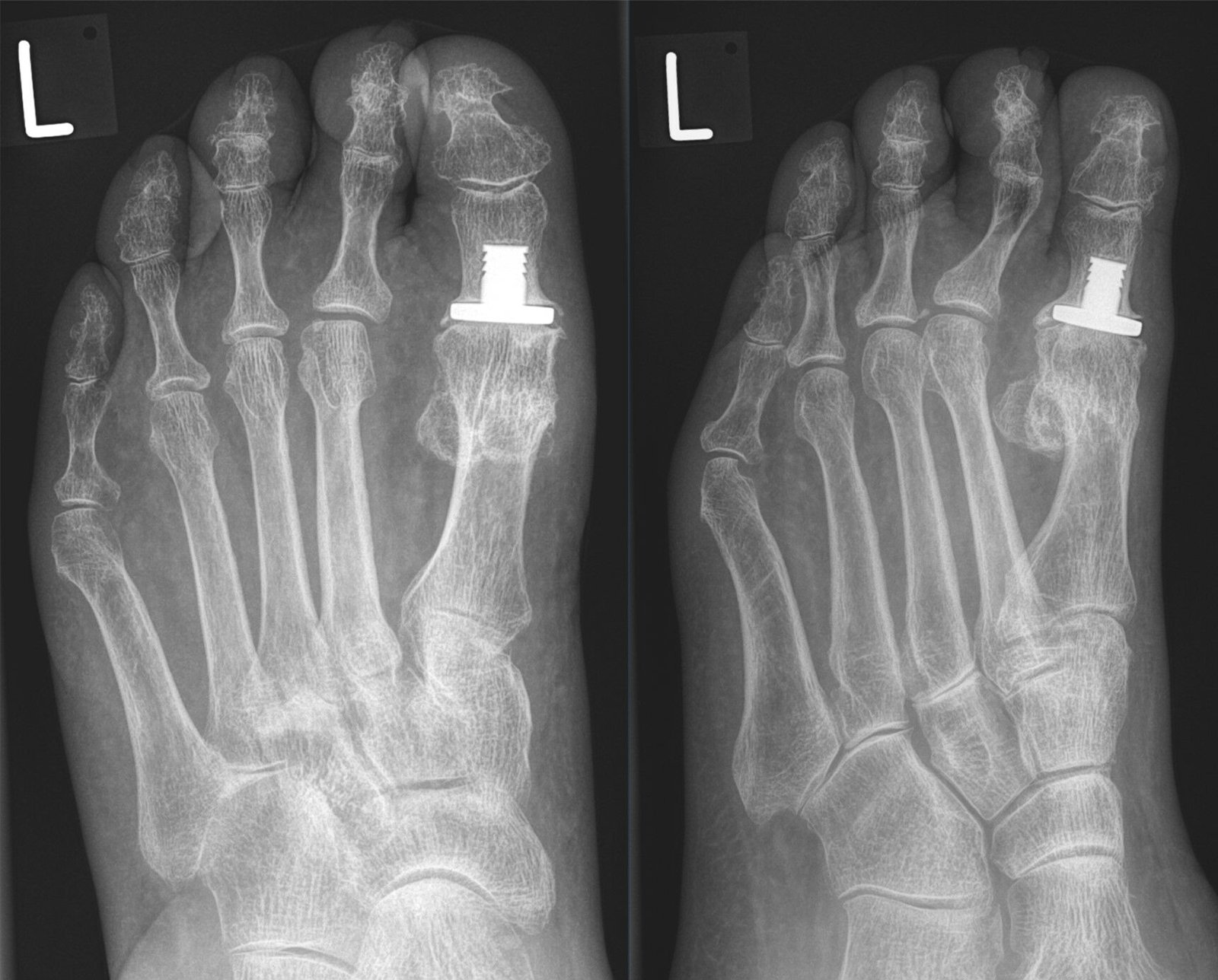

The FDA cleared this device through the 510(k) pathway, which finds it substantially equivalent to a device already on the market. Clearance is not the same as approval.
Key points
- The FDA cleared the HYALEX MTP Hemiarthroplasty Implant under 510(k) K250074 on April 3, 2026, almost 15 months after receiving the submission.
- The 510(k) summary names Arthrosurface's HemiCAP MTP implant, which has a cobalt-chrome surface, as the predicate; the Hyalex implant's surface is polyurethane and polyacrylic acid.
- Hyalex said it is starting a limited US release, with a full commercial rollout planned later in 2026.
The US Food and Drug Administration has cleared Hyalex Orthopaedics' Slalom MTP Hemiarthroplasty Implant for arthritis of the big-toe joint, the Lexington, Massachusetts, company said in an April 21 release distributed by GlobeNewswire, read via Santé log.
The implant replaces the damaged surface of the head of the first metatarsal, the bone at the base of the big toe, rather than fusing the joint. The company said the clearance allows its first commercial product launch in the US, ORTHOWORLD also reported.
The FDA record
The FDA's 510(k) database lists the device as the HYALEX MTP Hemiarthroplasty Implant, K250074. The agency received the traditional 510(k) on January 10, 2025, and found it substantially equivalent on April 3, 2026. It is a Class II device in the toe joint phalangeal (hemi-toe) polymer prosthesis category, reviewed by the orthopedic panel.
According to the clearance letter and 510(k) summary, the implant "is intended to be implanted to replace the distal metatarsal surface of the great toe for treatment of patients with degenerative and post-traumatic arthritis in the first metatarsal joint in the presence of good bone stock." The indications list hallux valgus, hallux limitus or hallux rigidus with an unstable or painful joint. The implant is single-use and is placed without bone cement.
The predicate device is the HemiCAP MTP Resurfacing Hemi-Arthroplasty Implant from Arthrosurface, with BioPoly's great toe implant as a reference device. The summary says both the Hyalex and HemiCAP implants replace the joint surface of the metatarsal head while keeping surrounding cartilage and bone. The main difference it identifies is the bearing surface: polyurethane and polyacrylic acid on the Hyalex implant against cobalt-chrome on the predicate.
Testing listed in the summary includes insertion, fatigue, micromotion, wear and contact pressure assessments, biocompatibility and MRI compatibility, design validation in cadavers by foot and ankle surgeons, and a one-year large animal study.
Launch plans
Hyalex said the implant is built on its Hydrosurf material, which it describes as a surface technology designed to closely replicate the biomechanical properties of native cartilage. The company said it is beginning a limited US market release with surgeon training programs, followed by a full commercial rollout later this year.
"We believe this system addresses a significant unmet clinical need while opening a meaningful market opportunity for tissue and motion-preserving solutions in first MTP joint disease," said Chief Executive Carl Vause.
The privately held company also said its Freestyle Knee Resurfacing System has received an FDA investigational device exemption for a US clinical trial. That product is not cleared for sale.
Sources
- Hyalex Orthopaedics Announces FDA 510(k) Clearance of the HYALEX Slalom MTP Hemiarthroplasty System (company press release distributed by GlobeNewswire, read via Santé log), Hyalex Orthopaedics, April 21, 2026
- Hyalex Orthopaedics Earns 510(k) for HYALEX Slalom MTP Hemiarthroplasty, ORTHOWORLD, April 21, 2026
- 510(k) K250074: HYALEX MTP Hemiarthroplasty Implant (database record), US Food and Drug Administration, April 3, 2026
- K250074 clearance letter and 510(k) summary, US Food and Drug Administration, April 3, 2026