FDA Clears Eyas Medical Imaging's Ascent3T MRI Scanner for Newborns and Infants
The compact 3 Tesla system, developed at Cincinnati Children's with Philips electronics, is sized to be installed inside neonatal intensive care units.
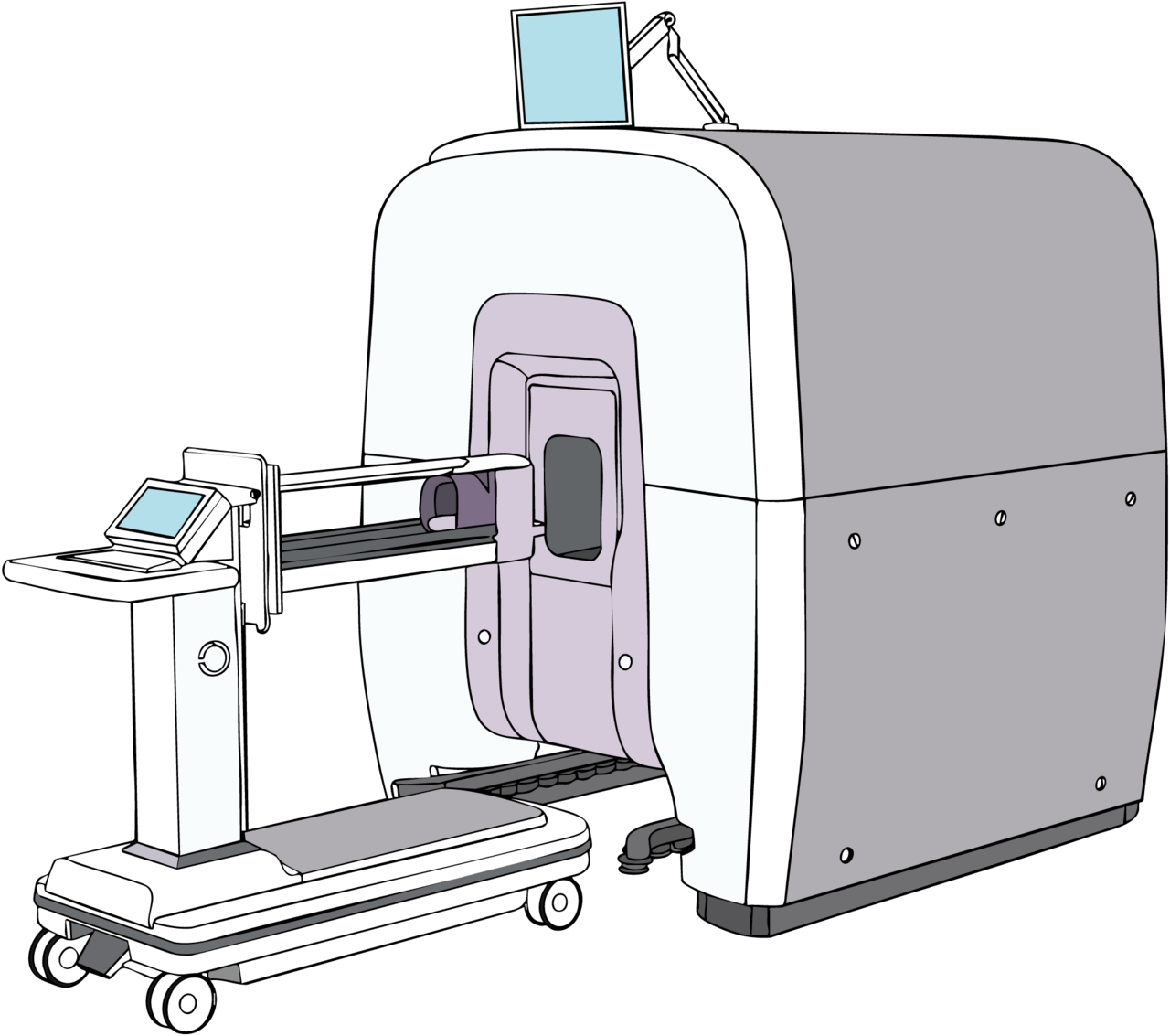

The FDA cleared this device through the 510(k) pathway, which finds it substantially equivalent to a device already on the market. Clearance is not the same as approval.
Key points
- The FDA cleared the Ascent3T Neonatal Magnetic Resonance Imaging System under 510(k) K253499 on January 26, 2026, for neonates and infants weighing up to 9 kg; Eyas announced it on February 5.
- The 3 Tesla scanner has a 25 cm bore, needs minimal helium and no quench pipe, and has a detachable table that doubles as a transport device.
- The 510(k) summary says no clinical studies were required; equivalence to the Embrace Neonatal MRI System rested on bench and phantom testing.
Eyas Medical Imaging has received US Food and Drug Administration 510(k) clearance for its Ascent3T Neonatal Magnetic Resonance Imaging System, a whole-body MRI scanner built for newborns and infants, the Cincinnati company announced on February 5, Diagnostic Imaging reported.
The FDA's 510(k) database lists the clearance as K253499. According to the agency's clearance letter and 510(k) summary, the FDA found the device substantially equivalent on January 26, 2026, about ten days before the announcement.
What the FDA cleared
The summary describes the Ascent3T as "a whole-body magnetic resonance scanner designed for neonates and infants" that can produce cross-sectional images of the head, body or extremities, and says it is suitable for patients weighing up to 9 kg (19.8 lbs).
The system uses a small superconducting magnet operating at 3.0 Tesla with a 25 cm patient bore. According to the summary, the magnet requires a minimal amount of helium and no quench pipe, which together with its size and weight support siting near the patient. The patient table is detachable and can serve as a transport device.
The primary predicate is the Embrace Neonatal MRI System from Aspect Imaging, cleared in 2017, with Philips' Ingenia family of MR systems as a reference device. The summary states that the Ascent3T "did not require clinical studies": substantial equivalence was shown through bench testing and phantom image validation, with images reviewed by a US board-certified radiologist.
Development and launch
The company said Ascent3T is the first dedicated high-field 3T MRI platform for neonates, a claim reported by Medical Economics. Its pitch is that the compact footprint allows installation directly in neonatal intensive care units, reducing the need to move fragile newborns to MRI suites elsewhere in the hospital.
The system was conceived at Cincinnati Children's Hospital Medical Center and draws on more than 1,700 infant MRI scans performed on prototype systems, the company said. It uses electronics, operating software and pulse sequences from Philips Medical Systems Nederland. Eyas was founded by Charles Dumoulin, an MR physicist and professor of pediatrics and radiology at Cincinnati Children's.
"510(k) clearance marks a significant milestone for the company and reflects our mission to enable healthcare professionals to save more babies' lives with state-of-the-art, precision imaging," said Matt Storer, the company's president and chief executive officer.
Eyas said it is scaling up operations and expects to begin US commercialization later in the year. The device is not yet commercially available outside the United States, according to the company.
Sources
- FDA Clears 3T MRI Device for Neonates and Infants, Diagnostic Imaging, February 5, 2026
- FDA clears neonatal MRI system designed for NICU use, Medical Economics, February 5, 2026
- 510(k) Premarket Notification database entry K253499, Ascent3T Neonatal Magnetic Resonance Imaging System, US Food and Drug Administration, January 26, 2026
- Clearance letter and 510(k) summary, K253499, US Food and Drug Administration, January 26, 2026