FDA Clears Boston Scientific's Asurys Fluid Management System for Urologic Endoscopy
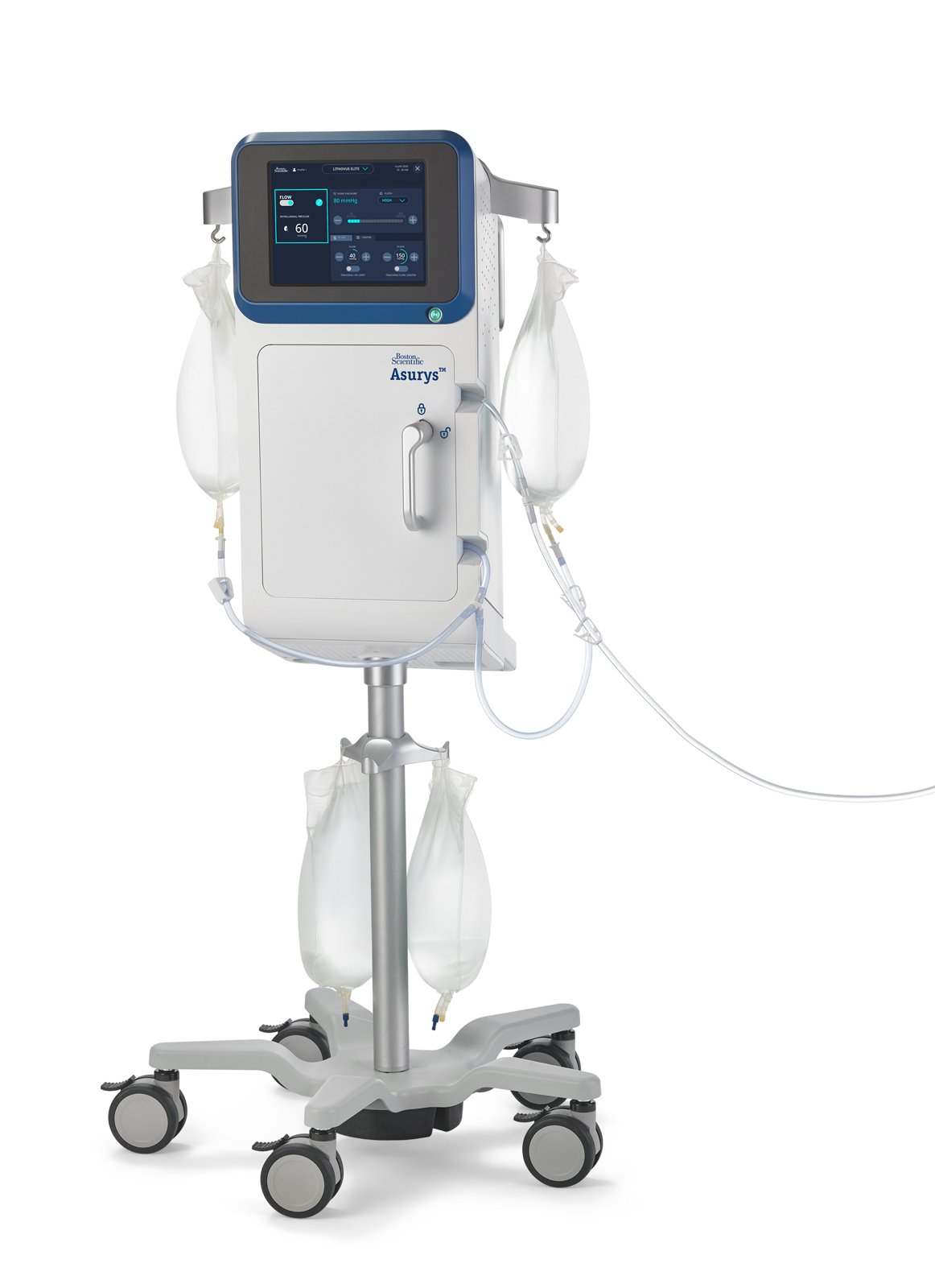
Paired with the company's LithoVue Elite ureteroscope, the irrigation pump can limit flow based on pressure readings inside the kidney.
The FDA cleared this device through the 510(k) pathway, which finds it substantially equivalent to a device already on the market. Clearance is not the same as approval.
Key points
- The FDA cleared the Asurys Fluid Management System under 510(k) K251273 on March 27, 2026; Boston Scientific announced it on March 30.
- The system pumps irrigation fluid during ureteroscopy, kidney stone surgery, cystoscopy and prostate procedures; it has a mode that responds to pressure data from the LithoVue Elite scope.
- Boston Scientific said a limited US market release would begin in the coming days.
The US Food and Drug Administration has cleared Boston Scientific's Asurys Fluid Management System, a pump that provides irrigation and distention during endoscopic urologic procedures such as ureteroscopy, the company announced on March 30.
Ureteroscopy is commonly used to diagnose and treat problems in the urinary tract, most often kidney stones. Boston Scientific said a challenge in the procedure is keeping enough irrigation flowing for clear visualization while keeping intrarenal pressure, the pressure inside the kidney, low. The company cited research suggesting elevated intrarenal pressure may contribute to complications including systemic inflammatory response syndrome, sepsis and renal damage.
What the FDA cleared
The FDA's 510(k) database lists K251273 for the Asurys Fluid Management System. The agency received the traditional 510(k) on April 24, 2025, and found the device substantially equivalent on March 27, 2026, about 11 months later. It is classified under the hysteroscopic insufflator regulation.
According to the 510(k) summary, the system consists of a console with a software-controlled peristaltic pump and a single-use sterile cassette and scope line. It supports ureteroscopy, percutaneous nephrolithotomy, cystoscopy and benign prostatic hyperplasia procedures and works with saline, sterile water and several other irrigation fluids.
In a standalone mode, the physician sets a pump pressure that the system maintains with various urological endoscopes. When it is connected to the LithoVue Elite single-use digital flexible ureteroscope with pressure monitoring, the physician can also set flow and flush limits based on the pressure measured in the urinary tract, so the system limits fluid flow to reduce how often intraluminal pressure rises higher than desired, the summary says. Scope buttons can trigger an on-demand flush.
The predicate is the Thermedx FluidSmart, cleared as K172048. The summary lists differences including maximum pump pressure, operating modes, the flush feature and the removal of fluid deficit monitoring, waste collection and fluid warming. Clearance rested on non-clinical testing including biocompatibility, sterility, electrical safety and software validation.
Company claims and rollout
"Until now, there has not been a system that can automatically respond to IRP data in real-time," said Ronald Morton, chief medical officer for urology at Boston Scientific. That is the company's claim.
Boston Scientific said Asurys is the latest product in its StoneSmart portfolio for managing kidney stones and that controlling irrigation from the scope handle is designed to reduce reliance on support staff. "Limited market release of the device in the U.S. will begin in the coming days," the company said.
The clearance was also reported by Urology Times. Boston Scientific did not disclose pricing.
Sources
- Boston Scientific receives FDA clearance for the Asurys Fluid Management System, Boston Scientific, March 30, 2026
- FDA grants clearance to Asurys fluid management system for endoscopic urologic procedures, Urology Times, March 30, 2026
- 510(k) K251273: Asurys Fluid Management System (database record), US Food and Drug Administration, March 27, 2026
- K251273 clearance letter and 510(k) summary, US Food and Drug Administration, March 27, 2026