FDA Authorizes Vitestro's Aletta, First Robotic Device to Draw Blood on Its Own
The De Novo grant creates a new device type for robotic venous blood collection, limited to adults in outpatient settings under a trained phlebotomist's oversight.
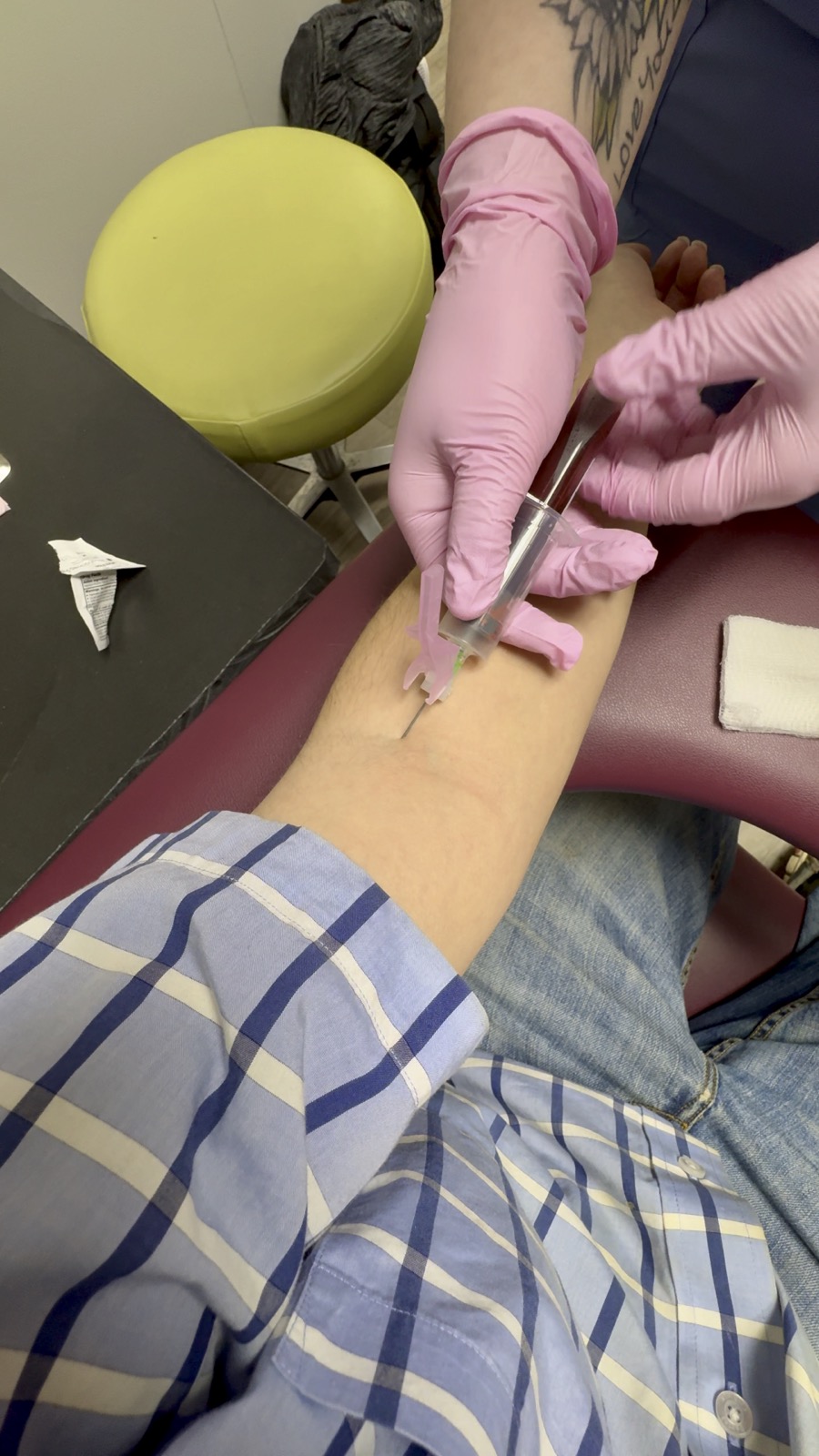

The FDA granted this device through the De Novo pathway, used for new low-to-moderate-risk device types with no existing equivalent.
Key points
- The FDA granted Vitestro's De Novo request, DEN250046, on August 19, 2026, creating the device type 'robotic peripheral venous blood collection system'.
- Aletta is authorized for adults in outpatient settings; a trained phlebotomist starts each session and can oversee up to three devices at once.
- Vitestro says it will deploy Aletta commercially in Europe first and run a US multicenter trial before US availability.
The US Food and Drug Administration has authorized Vitestro's Aletta, which the agency described as the first standalone robotic device that can draw blood from a patient's arm without hands-on operator intervention, the FDA announced on August 19. The agency granted the authorization through the De Novo pathway, used for new types of low- to moderate-risk devices that have no predicate on the market.
The FDA's De Novo database lists the request, DEN250046, for the Aletta Autonomous Robotic Phlebotomy Device from Vitestro of Utrecht, the Netherlands. The agency received the request on September 26, 2025, and granted it on August 19, 2026, creating a new device type, "robotic peripheral venous blood collection system," under regulation 880.6975 with product code SIW. Along with the authorization, the FDA said it is establishing special controls covering labeling, performance testing and clinical testing.
What the device does, and who supervises it
Aletta is authorized for adults in outpatient settings and must be operated under the oversight of a supervisor trained in phlebotomy, the FDA said. One phlebotomist can oversee up to three devices at a time, which the agency said may help address the current shortage of phlebotomists in the US.
According to the FDA, a trained phlebotomist starts each session. The device guides the patient to position the arm, uses near-infrared light and Doppler ultrasound to find a suitable vein and tell it apart from arteries, and does not attempt the procedure if no appropriate vein is found. It then applies a tourniquet, prepares the skin, inserts and disposes of the needle, changes collection tubes and places a bandage. The supervising phlebotomist checks that the tubes are filled in the correct order and adequately full. If the patient moves too much, the needle detaches automatically and the draw stops.
The FDA said the authorization rests on clinical data showing that Aletta's successful blood draw rates were comparable to or better than those of trained human phlebotomists when the device proceeded with a stick, across patients including those who reported difficult vein access and those with varying skin tones. The agency said device-related adverse events were uncommon and mild. Its announcement did not give the success-rate figures.
"Blood draws are one of the most commonly performed medical procedures in the United States, yet patients may face delays due to a growing shortage of trained phlebotomists," said Michelle Tarver, director of the FDA's Center for Devices and Radiological Health.
Europe first, then a US trial
Vitestro announced the authorization on August 20. In its release, the company said Aletta is already CE-marked and in clinical and pre-commercial use in Europe, and that it will be commercially deployed in Europe first, with the US to follow.
Before US commercial availability, Vitestro said, it plans a US multicenter clinical trial to validate Aletta's performance and safety, alongside manufacturing scale-up and building commercial infrastructure. It did not give a US launch date.
"From our CE mark in Europe to today's FDA authorization in the U.S., this milestone reflects years of technical development and confirms that autonomous phlebotomy can meet the same rigorous safety and effectiveness standards patients and clinicians expect globally," said Toon Overbeeke, Vitestro's chief executive and co-founder.
Sources
- FDA Authorizes First-Of-Its-Kind Robotic Blood Draw Device, US Food and Drug Administration, August 19, 2026
- De Novo DEN250046: Aletta Autonomous Robotic Phlebotomy Device, US Food and Drug Administration, August 19, 2026
- Vitestro Receives FDA De Novo Authorization for Aletta, the World's First Autonomous Robotic Phlebotomy Device, Vitestro, August 20, 2026