FDA Approves Empirical Spine's LimiFlex Tether as Motion-Preserving Alternative to Fusion
The implant stabilizes one lumbar level after decompression for Grade I degenerative spondylolisthesis; the pivotal study compared it with fusion patients matched by propensity scores.
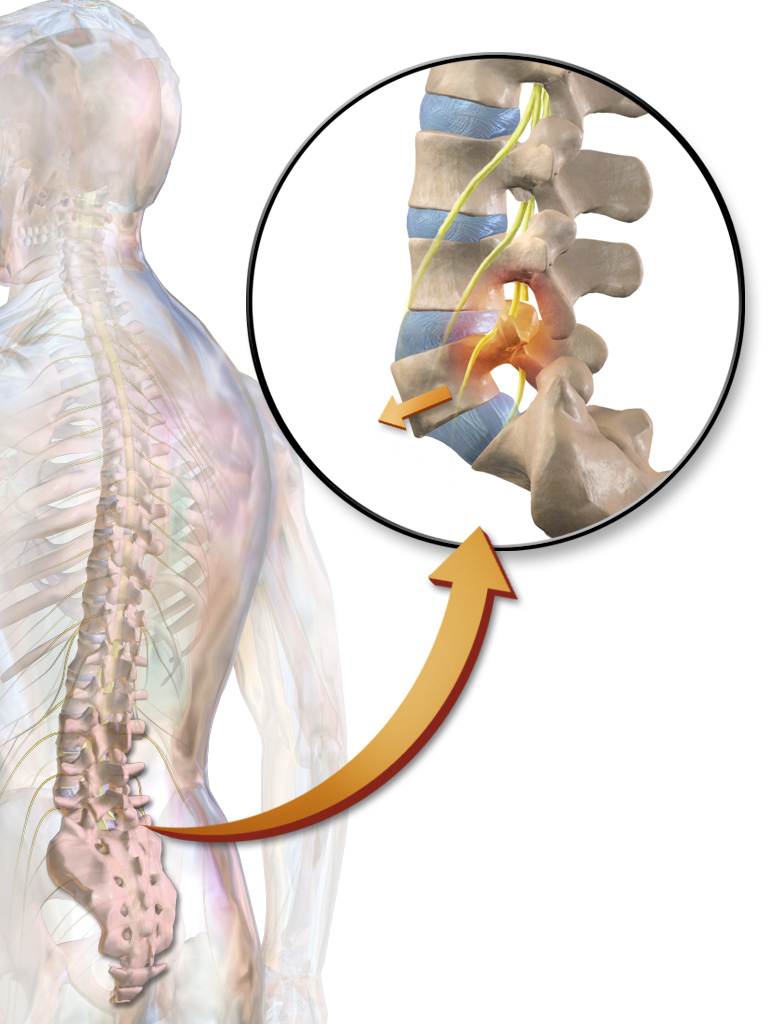

The FDA approved this high-risk device through premarket approval (PMA), after reviewing clinical evidence of safety and effectiveness.
Key points
- The FDA approved the LimiFlex Dynamic Sagittal Tether under PMA P220031 on February 12, 2026; Empirical Spine announced it on February 18.
- It is indicated for one level from L3 to L5 after decompression for Grade I degenerative spondylolisthesis with spinal stenosis.
- In a non-randomized study of 299 patients, the FDA summary reports 24-month composite success of 76.7% with LimiFlex against 64.6% for fusion controls, meeting the non-inferiority goal.
The US Food and Drug Administration has granted premarket approval to Empirical Spine's LimiFlex Dynamic Sagittal Tether, an implant designed to stabilize the lower spine after decompression surgery without fusing the vertebrae, the company said on February 18 in a release distributed by ACCESS Newswire, read via BioSpace.
The FDA's premarket approval database lists the decision as P220031, issued on February 12, 2026. The agency received the application on December 19, 2022. According to the FDA's Summary of Safety and Effectiveness Data, the device received breakthrough device status on March 26, 2021.
What the FDA approved
The FDA summary says LimiFlex is "indicated for use at one level from L3 to L5, in skeletally mature patients following surgical decompression for treatment of lumbar degenerative spondylolisthesis (Grade I per Meyerding classification in a lateral radiograph) with spinal stenosis." Degenerative spondylolisthesis is a forward slip of one vertebra over the one below it. Patients must have had at least three months of non-operative treatment without improvement.
The implant consists of two titanium spring couplers attached to polyethylene straps that wrap around adjacent spinous processes, the bony projections at the back of the vertebrae. The summary says it is designed to restrict forward bending at the treated level while allowing controlled movement. Contraindications include missing or fractured spinous processes, facet joint incompetence and severe osteoporosis.
Empirical Spine, based in San Carlos, California, said the device grew out of research at Stanford University and that it positions motion-preserving stabilization between decompression alone and fusion.
The pivotal study
The supporting study was prospective, multi-center, non-randomized and non-blinded, according to the FDA summary. It enrolled 299 patients at 28 sites, treated between July 2017 and September 2020: 140 received LimiFlex and 159 were fusion controls, a mix of prospective and retrospective patients treated with transforaminal lumbar interbody fusion and pedicle screws. The groups were balanced using propensity scores, and the FDA asked that one control site's 19 patients be excluded from the analysis.
The primary endpoint was composite clinical success at 24 months, requiring at least a 15-point improvement on the Oswestry Disability Index, no neurological decline, no additional surgery at the treated or adjacent levels and no device failure. The FDA summary reports success in 76.7% of LimiFlex patients against 64.6% of controls, a difference that met the study's non-inferiority criterion.
Average procedure length was 112 minutes for LimiFlex against 190 minutes for fusion, and average length of stay 0.64 days against 2.95 days, the summary says. Serious adverse events were numerically higher with LimiFlex, at 34.3% against 31.7%, and the core lab reported 24 spinous process fractures in the LimiFlex group. Subsequent surgical interventions were numerically lower, at 7.2% against 10.9%. Patients are to be followed to 60 months.
The company said a limited US launch will begin at select centers that took part in its investigational device exemption trial, with a broader launch later in the year.
Sources
- FDA Grants PMA Approval to LimiFlex(TM) Dynamic Sagittal Tether (ACCESS Newswire release, read via BioSpace), Empirical Spine (via BioSpace), February 18, 2026
- Premarket Approval (PMA) database entry P220031, LimiFlex Dynamic Sagittal Tether, US Food and Drug Administration, February 12, 2026
- Summary of Safety and Effectiveness Data, P220031, US Food and Drug Administration, February 12, 2026