FDA Approves Artivion's AMDS Hybrid Prosthesis for Acute Aortic Dissection
Premarket approval replaces the arch stent's 2024 humanitarian device exemption, on the strength of two-year data from the 93-patient PERSEVERE study.

The FDA approved this high-risk device through premarket approval (PMA), after reviewing clinical evidence of safety and effectiveness.
Key points
- The FDA approved Artivion's AMDS Hybrid Prosthesis under PMA P250055 on June 26, 2026; the device previously reached the US market under a humanitarian device exemption granted in December 2024.
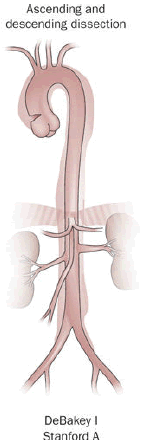
- It is indicated for acute DeBakey Type I aortic dissections with malperfusion in patients having open surgical repair within 14 days of diagnosis.
- In PERSEVERE, 26.9% of patients had at least one major adverse event within 30 days, against a performance goal of 58%, and the imaging core lab found no distal anastomotic new entry tears, according to the FDA summary.
The US Food and Drug Administration has approved Artivion's AMDS Hybrid Prosthesis, an aortic arch stent implanted during open surgery for acute aortic dissection, Endovascular Today reported on June 30, citing the company's announcement.
The FDA's premarket approval database lists the device under PMA P250055, filed by the Kennesaw, Georgia, company on December 29, 2025, with a decision date of June 26, 2026. It is indicated for patients with acute DeBakey Type I aortic dissections with malperfusion, including cerebral, visceral, renal and peripheral malperfusion, and a primary entry tear within the ascending aorta proximal to the innominate artery, who are undergoing open surgical repair within 0 to 14 days of diagnosis.
From humanitarian exemption to PMA
According to the FDA's summary of safety and effectiveness data, the AMDS was originally granted a Humanitarian Device Exemption on December 4, 2024, under H230007. The summary says the 30-day primary endpoint results of the PERSEVERE study supported that exemption, and additional longer-term data supported the PMA.
The device is an uncovered stent of braided nitinol wire attached to a polytetrafluoroethylene felt cuff and mounted on a single-use delivery system, the summary states. Artivion said it is used alongside a standard hemiarch replacement of the ascending aorta and is designed for rapid deployment in the aortic arch, according to Endovascular Today. The company said AMDS is commercially available in Europe, Canada and certain countries in Asia.
The PERSEVERE study
PERSEVERE is a prospective, single-arm investigational device exemption study at 26 US sites that treated 93 patients between July 2022 and November 2023, with follow-up planned for five years. Its two co-primary endpoints were measured against performance goals drawn from published outcomes of the surgery without AMDS.
Within 30 days, 26.9% of patients had at least one major adverse event (death, new disabling stroke, new renal failure requiring dialysis or heart attack), against a performance goal of 58%, the summary states. Thirty-day all-cause mortality was 9.7%. The imaging core lab reported no distal anastomotic new entry tears, against a goal of 45%, though 15 patients had unknown status; a worst-case analysis counting all 15 still met the goal. Through two years, all-cause death was 24.7% (23 of 93) and 10 patients needed 15 additional aortic procedures.
Artivion said the 30-day results represented a 72% reduction in all-cause mortality and a 54% reduction in major adverse events compared with the standard hemiarch procedure, Endovascular Today reported. Those comparisons are company-reported; the FDA summary evaluates the study against performance goals rather than a control group.
Sources
- Artivion's AMDS Hybrid Prosthesis Approved by FDA, Endovascular Today, June 30, 2026
- PMA P250055: AMDS Hybrid Prosthesis (database record), US Food and Drug Administration, June 26, 2026
- Summary of Safety and Effectiveness Data, PMA P250055, US Food and Drug Administration, June 26, 2026