Ocular Therapeutix's Axpaxli Beats Aflibercept in Phase 3 SOL-1 Wet AMD Superiority Trial
A single dose of the axitinib hydrogel implant kept vision in 74.1% of patients at Week 36 versus 55.8% on aflibercept, the company reported, and it plans an FDA filing.

These results come from a Phase 3 trial, the large trial usually needed before approval.
Key points
- Axpaxli met the superiority primary endpoint of the Phase 3 SOL-1 trial, with 74.1% of patients maintaining vision at Week 36 versus 55.8% on aflibercept (p=0.0006), Ocular Therapeutix reported.
- At Week 52, 65.9% of Axpaxli patients had maintained vision versus 44.2% on aflibercept, the company said.
- Ocular plans a New Drug Application based on SOL-1, subject to FDA discussions; the second Phase 3 trial, SOL-R, is due to read out in early 2027.
Ocular Therapeutix said on February 17 that a single injection of its investigational wet age-related macular degeneration (AMD) treatment Axpaxli beat a single injection of aflibercept (2 mg) on the primary endpoint of the Phase 3 SOL-1 superiority trial, in a release distributed by GlobeNewswire and read via BioSpace. The company said it plans to submit a New Drug Application based on the results, subject to formal discussions with the FDA.
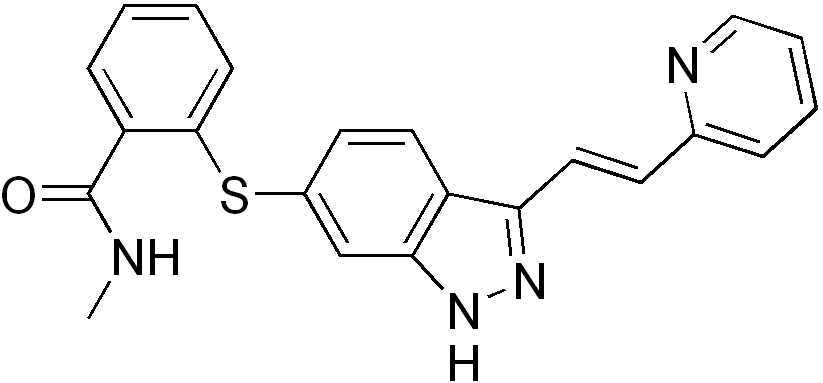
Axpaxli, also known as OTX-TKI, is a bioresorbable hydrogel implant injected into the eye that releases axitinib, a tyrosine kinase inhibitor. The results are company-reported topline data, with detailed results scheduled for the Macula Society's annual meeting later in February.
Trial design and results
SOL-1 is being run under a Special Protocol Assessment agreement with the FDA and was designed to support a superiority label under the agency's 2023 draft guidance for wet AMD therapies, Ophthalmology Times reported. The trial enrolled 344 newly diagnosed patients at more than 100 sites in the U.S. and Argentina. After an eight-week loading phase of two aflibercept injections, patients whose vision had reached about 20/20 or improved by at least 10 letters were randomized to one dose of Axpaxli (0.45 mg) or one dose of aflibercept.
The primary endpoint was the share of patients who kept their vision, defined as losing fewer than 15 letters on a standard eye chart, at Week 36. That was 74.1% with Axpaxli versus 55.8% with aflibercept, a risk difference of 17.5% under the prespecified statistical model (p=0.0006).
The trial stayed masked to Week 52, when 65.9% of Axpaxli patients and 44.2% of aflibercept patients had maintained vision (risk difference 21.1%; p<0.0001), a prespecified key secondary endpoint. In an exploratory measure, 80.6%, 74.7% and 68.8% of Axpaxli patients needed no rescue injection at Weeks 24, 36 and 52, compared with 72.1%, 56.4% and 47.7% on aflibercept.
On retinal fluid, 55.9% of Axpaxli patients kept central subfield thickness, a measure of retinal swelling, within 30 microns of baseline at Week 36 versus 37.8% on aflibercept (nominal p=0.0013). At Week 52 the figures were 44.1% and 34.9% (nominal p=0.1094).
Safety and next steps
As of the Week 52 database lock on February 5, Ocular said there were no treatment-related ocular or systemic serious adverse events, and no cases of endophthalmitis, retinal vasculitis, retinal detachment or implant migration in the Axpaxli arm.
"Demonstrating superiority in wet AMD to a single dose of aflibercept (2 mg) under the FDA's stringent evidentiary standard required in this trial was an exceptionally difficult bar," said Pravin Dugel, the company's chief executive.
Patients were re-dosed at Week 52, will be dosed again at Week 76 and will be followed for safety through Week 104. A second Phase 3 trial, the non-inferiority study SOL-R, which re-doses Axpaxli every six months and enrolled 555 patients, is expected to report topline data in the first quarter of 2027, the company said.
Sources
- Ocular Therapeutix™ Reports Positive Results from Landmark SOL-1 Phase 3 Superiority Trial in Wet AMD (GlobeNewswire release, read via BioSpace), Ocular Therapeutix via BioSpace, February 17, 2026
- Ocular Therapeutix releases positive topline results from SOL-1, Ophthalmology Times, February 17, 2026