FDA Grants Full Approval to Kite's Tecartus CAR T Therapy for Relapsed Mantle Cell Lymphoma
The decision converts the cell therapy's 2020 accelerated approval and adds data from ZUMA-2 Cohort 3, in which patients who had not received a BTK inhibitor had a 91% response rate, Kite said.

The FDA approved this drug or biologic for a specific use.
Key points
- The FDA granted traditional approval to Kite's Tecartus (brexucabtagene autoleucel) for adults with relapsed or refractory mantle cell lymphoma, converting an accelerated approval.
- Kite said the updated label adds Cohort 3 of the single-arm ZUMA-2 study, in BTK inhibitor-naive patients: 91% objective response and 79% complete remission, versus 87% and 62% in BTK inhibitor-exposed Cohort 1.
- In pooled safety data from 168 patients, cytokine release syndrome occurred in 93% and neurologic events in 80%, with Grade 3 or higher rates of 12% and 33%.
The FDA has granted traditional, or full, approval to Kite's CAR T-cell therapy Tecartus (brexucabtagene autoleucel) for adults with relapsed or refractory mantle cell lymphoma (MCL), Kite, a Gilead company, announced on April 2.
The decision converts the MCL indication from accelerated approval and fulfills Kite's post-marketing requirement to verify and describe clinical benefit in a confirmatory trial, the company said. The updated label adds efficacy, safety and pharmacokinetic data from Cohort 3 of the ZUMA-2 study, in patients who had relapsed after one or more lines of therapy and had not received a Bruton tyrosine kinase (BTK) inhibitor.
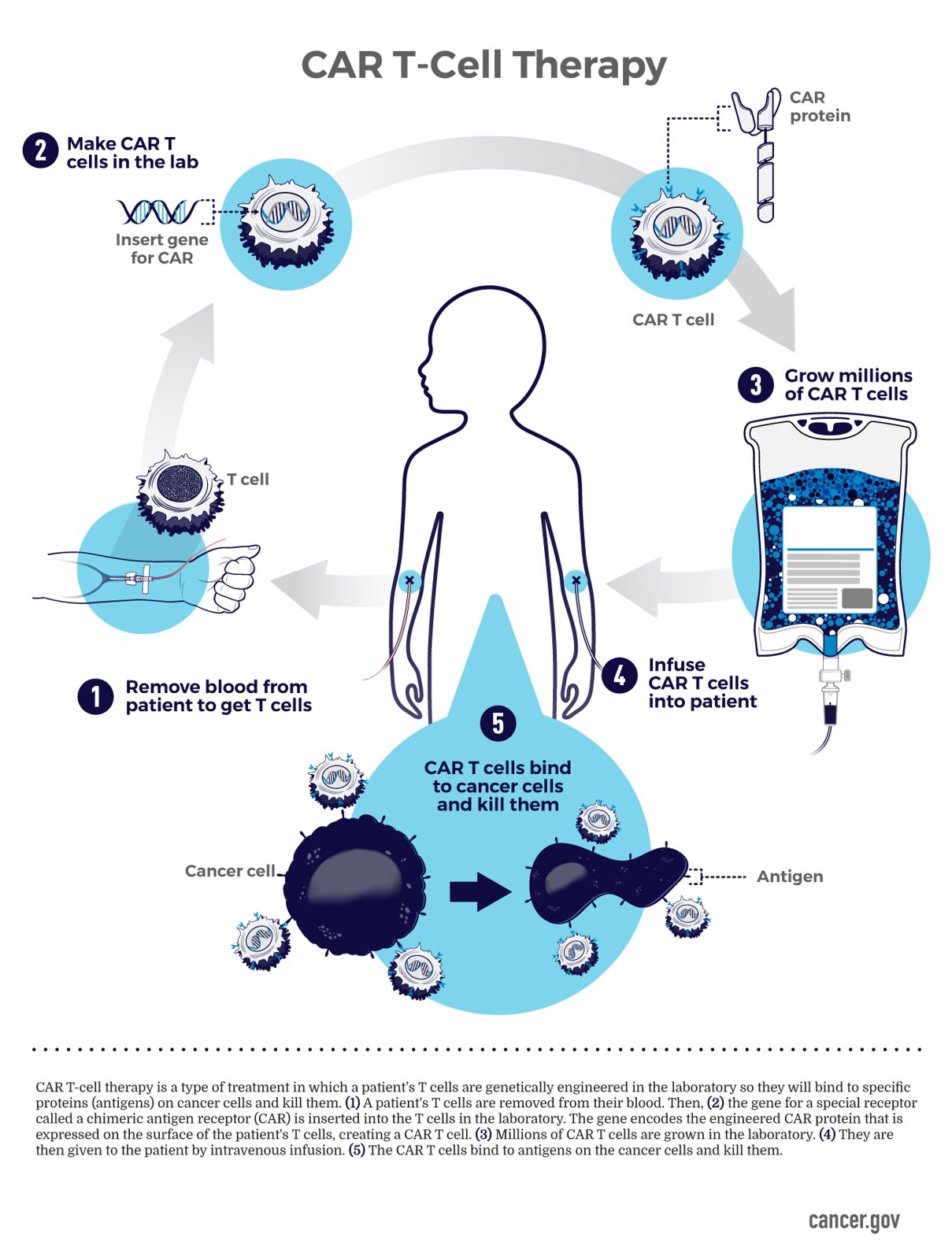
Tecartus was first approved in MCL in 2020 on the basis of an 87% objective response rate in the Phase 2 ZUMA-2 trial, OncLive reported at the time. It is a CD19-directed therapy made from each patient's own T cells, which are genetically modified and given as a single infusion. MCL is a rare, aggressive form of non-Hodgkin lymphoma that predominantly affects men over 60; Kite said about 33,000 people worldwide are diagnosed each year.
ZUMA-2 results in the updated label
ZUMA-2 is a single-arm, open-label, multicenter study. Cohorts 1 and 2 enrolled patients who had received up to five prior lines of therapy, including a BTK inhibitor; Cohort 3 enrolled patients with up to five prior lines who were BTK inhibitor-naive. In all, 82 patients were treated in Cohorts 1 and 2 and 86 in Cohort 3. The primary endpoint was objective response rate as assessed by an independent radiologic review committee.
In the efficacy-evaluable populations reported in the updated prescribing information, the objective response rate was 87% in Cohort 1 (60 patients, median of three prior therapies) and 91% in Cohort 3 (86 patients, median of one prior therapy). Complete remission rates were 62% and 79%. Median duration of response had not been reached in either cohort, with median follow-up for response of 8.6 months and 23.0 months at the primary analyses. Kite cautioned that comparisons across cohorts should be interpreted with caution.
"The Cohort 3 results showed high response rates, including deep remissions, in patients who were Bruton tyrosine kinase inhibitor-naïve, with a manageable safety profile consistent with prior experience," said Michael Wang of The University of Texas MD Anderson Cancer Center, ZUMA-2 lead investigator, in Kite's statement.
Safety
In MCL safety data pooled across the three cohorts (168 patients), cytokine release syndrome occurred in 93% of patients, 12% at Grade 3 or higher, and neurologic events in 80%, 33% at Grade 3 or higher. Infections occurred in 63%, with Grade 3 or higher infections in 33%. Serious adverse reactions were reported in 65% of Cohort 3 patients.
Tecartus carries a boxed warning for cytokine release syndrome, neurologic toxicities and secondary hematological malignancies, including T-cell malignancies reported after BCMA- and CD19-directed CAR T therapies. Kite said the data support Tecartus as a second-line option for patients whose cancer has returned.
Sources
- U.S. FDA Grants Full Approval of Kite's Tecartus for Adult Patients with Relapsed or Refractory Mantle Cell Lymphoma, Gilead Sciences (Kite), April 2, 2026
- FDA Approves Brexucabtagene Autoleucel for Relapsed/Refractory MCL, OncLive, July 24, 2020