FDA Approves Gilead's Hepcludex, First US Treatment for Chronic Hepatitis Delta
The accelerated approval of the once-daily injection bulevirtide rests on viral load and liver enzyme responses in the Phase 3 MYR301 trial; a benefit on clinical outcomes has not been established.

The FDA approved this drug or biologic for a specific use.
Key points
- The FDA on May 22 approved bulevirtide-gmod (Hepcludex) for adults with chronic hepatitis delta virus infection without cirrhosis or with compensated cirrhosis, the first FDA-approved treatment for the disease.
- In the Phase 3 MYR301 trial, 48% of treated participants had a combined virologic and liver-enzyme response at Week 48, versus 2% in a delayed-treatment group, the FDA said.
- The approval is accelerated; Gilead said a confirmatory long-term outcomes study has begun, and the label carries a boxed warning on flares after stopping treatment.
The Food and Drug Administration on May 22 approved Gilead Sciences' Hepcludex (bulevirtide-gmod) injection to treat chronic hepatitis delta virus (HDV) infection in adults without cirrhosis or with compensated cirrhosis, according to the agency's announcement. The FDA said bulevirtide is the first FDA-approved treatment for chronic HDV infection.
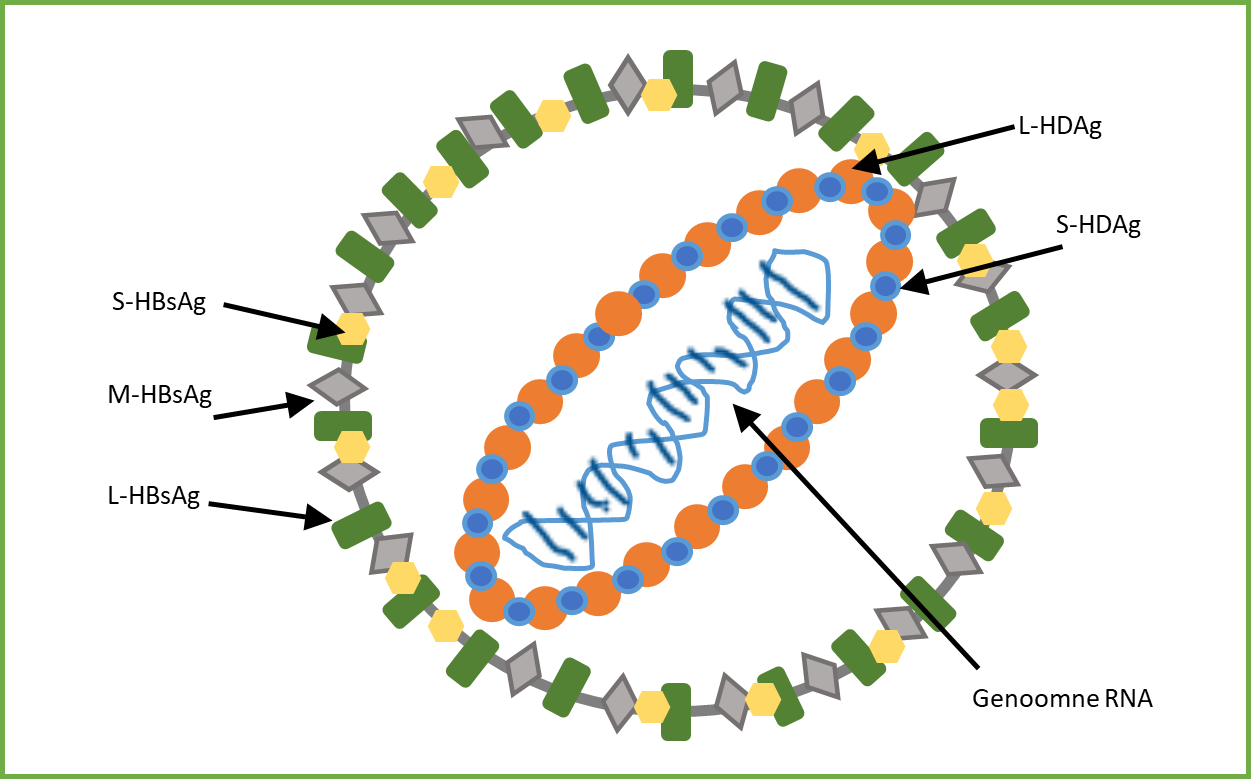
HDV infection occurs only in people who also have hepatitis B virus (HBV) infection. It can cause rapid development of liver scarring, liver cancer, liver failure and death, the FDA said. Gilead said an estimated 40,000 to 80,000 people in the US are living with HDV.
"Today's approval fills a critical gap in care for patients with chronic HDV infection, who until now have had no FDA-approved therapies available," said Wendy Carter, acting director of the Office of Infectious Diseases in the FDA's Center for Drug Evaluation and Research.
The MYR301 trial
The FDA based its decision on MYR301 (NCT03852719), a multicenter, randomized, open-label Phase 3 trial. Participants were assigned either to immediate treatment with Hepcludex 8.5 mg once daily for 144 weeks, or to a 48-week observation period followed by 96 weeks of treatment.
The primary endpoint, measured at Week 48, was a combined response: undetectable HDV RNA or a decline of at least 2 log10 IU/mL from baseline, together with normal alanine aminotransferase (ALT), a liver enzyme. The combined response rate was 48% in the treated group and 2% in the delayed-treatment group, according to the FDA. At Week 48, 20% of treated participants had undetectable HDV RNA, versus none in the delayed group; that share rose to 36% at Week 96 and 50% at Week 144 in the treated group.
Because the approval was granted under the accelerated approval pathway, it rests on these virologic and biochemical measures. Gilead said an improvement in disease-related clinical outcomes has not been established, and that it has committed to, and already started, a confirmatory long-term outcomes study. Contagion Live noted that the trial's open-label design introduces potential for assessment bias.
Safety and the drug
The label includes a boxed warning that stopping Hepcludex may result in severe acute flares of hepatitis D and hepatitis B. Other possible side effects listed by the FDA include hypersensitivity reactions including anaphylaxis, injection site reactions, headache, abdominal pain, fatigue and itching.
Bulevirtide is an entry inhibitor that blocks HDV and HBV from getting into liver cells, according to Gilead. It is given as a once-daily injection under the skin. The FDA had granted it breakthrough therapy designation, orphan-drug designation and priority review. A 2 mg dose of bulevirtide is already approved in the European Economic Area and other countries, the company said.
Sources
- FDA Approves First Treatment for Chronic Hepatitis Delta Virus (HDV) Infection, U.S. Food and Drug Administration, May 22, 2026
- FDA Grants Accelerated Approval to Gilead's Hepcludex (bulevirtide-gmod), the First and Only Approved Treatment for Chronic Hepatitis Delta Virus (HDV), Gilead Sciences, May 22, 2026
- Bulevirtide Approved as First US Treatment for Chronic Hepatitis Delta Virus, Contagion Live, May 22, 2026