FDA Issues Draft Guidance on Premarket Submissions for Surgical Robots
The draft sets out testing, clinical data and labeling recommendations for teleoperated robotic systems and treats their clinical studies as significant risk.

Key points
- The FDA's Center for Devices and Radiological Health issued draft guidance on premarket submissions for robotically-assisted surgical devices, dated September 25, 2026, under docket FDA-2026-N-9505.
- The draft covers non-clinical testing such as total system latency, cybersecurity, human factors, training and clinical data, and excludes remotely teleoperated and autonomous robots.
- The FDA is taking comments for 60 days after the Federal Register notice; AHA News reported the deadline as November 24.
The Food and Drug Administration has issued draft guidance setting out what makers of robotically-assisted surgical devices should include in premarket submissions, covering non-clinical testing, clinical data and labeling.
The draft guidance, from the Center for Devices and Radiological Health and dated September 25, describes these devices as teleoperated, software-controlled systems that help qualified practitioners position and control surgical instruments in open, minimally invasive or endoluminal procedures. The FDA said the recommendations reflect its current thinking and are intended to promote consistency and make review of such submissions more efficient. Like other FDA guidance, the document is nonbinding.
What the draft covers and excludes
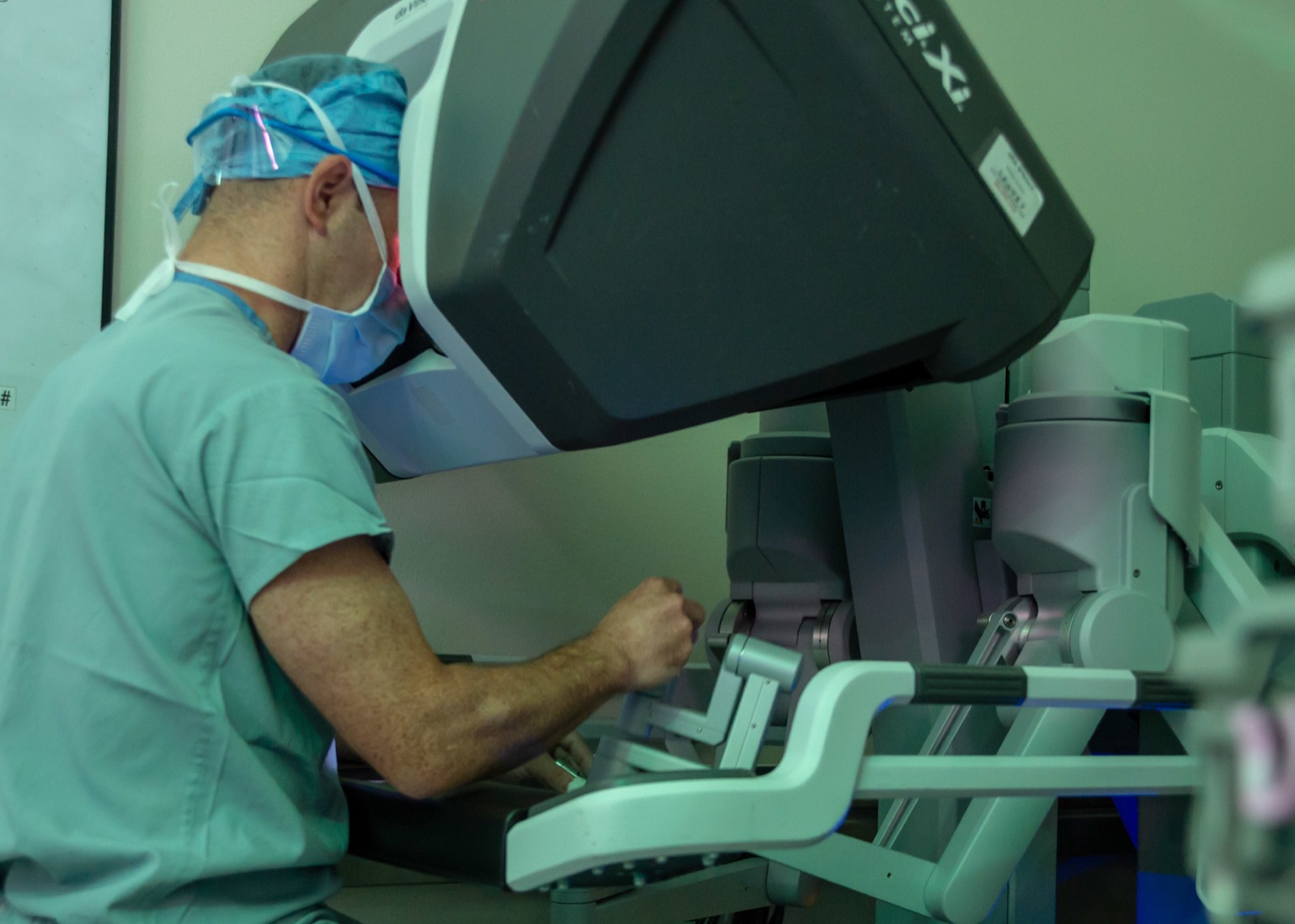
The guidance describes a typical system as having a surgeon console, a bedside or patient subassembly with working arms that control instruments and cameras inside the patient, and an operating room staff subassembly holding supporting hardware such as electrosurgical units and insufflation equipment.
Pre-operative planning systems and stereotaxic navigation systems are outside its scope. The draft also does not address robots that assist in placing interventional devices such as catheters, remotely teleoperated systems, or autonomous robots that perform significant parts of a procedure without a practitioner, although the FDA says some of its recommendations may still apply to them. The agency recommends that makers of devices outside the scope, or who are unsure whether their device qualifies, seek feedback through its Q-Submission Program.
Testing, training and clinical data
For 510(k) submissions, the draft asks manufacturers to name the classification regulation and product code based on the proposed predicate and to present a structured comparison with that predicate. Its non-clinical testing section includes measurement of total system latency, the cumulative delay from the surgeon's hand input to the instrument's movement and the visual feedback on the display, which the FDA says directly affects surgical control. The draft also addresses reliability over the system's service life, software, wireless technology and cybersecurity, including penetration testing that considers every network element that communicates with the robot.
Manufacturers are asked to develop and validate a training program so users reach competency before clinical use, to summarize it in the submission and to begin human factors work early in development. The guidance introduces the idea of an umbrella procedure of sufficient complexity and risk that its performance data can support related, lower-risk covered procedures in the same specialty without additional in vivo testing.
On clinical evidence, the draft says clinical data are often needed for robots that have not previously been authorized in the U.S., and may be requested for modified systems with a new intended use, use in special populations such as children, different technology, or claims such as superiority. The FDA wrote that it generally considers investigational devices covered by the guidance to be significant risk devices, so their studies would not qualify for the abbreviated investigational device exemption requirements. Data may come from prospective studies, real-world evidence or published literature, and the draft says robotic comparator data is preferred over laparoscopic data, which in turn is preferred over data from open surgery. It also lists additional endpoints for certain procedures, such as anastomotic leak rate for Roux-en-Y gastric bypass and perforation rate for endoscopic submucosal dissection of colorectal lesions.
The document asks for comments within 60 days of the Federal Register notice announcing it. As reported by AHA News, the FDA is seeking comments by November 24 before releasing a final version.
Sources
- Robotically-Assisted Surgical Devices - Premarket Submissions (draft guidance), U.S. Food and Drug Administration, September 25, 2026
- FDA issues draft guidance on premarket submissions of robotically-assisted surgical devices, AHA News, September 25, 2026