FDA Finalizes 510(k) Guidances for Dental Composite Resins and Curing Lights
The two documents replace guidance from 2005 and 2006 and change how curing light output should be measured.

Key points
- The FDA issued final guidances on September 2, 2026 for 510(k) submissions for dental composite resins and dental curing lights, superseding 2005 and 2006 versions.
- After comments on the 2024 drafts, the curing light guidance now calls for radiant power output measured at the light guide tip and drops resin hardening-depth measurements.
- The composite resin guidance says clinical data are generally unnecessary but may be requested for performance claims such as longevity or reduced decay.
The FDA on Wednesday finalized two guidances setting out what manufacturers should include in 510(k) submissions for dental composite resins, the tooth-colored materials used to fill cavities, and for the dental curing lights that harden them, replacing versions issued in 2005 and 2006.
The agency announced the guidances in the Federal Register on September 2. They supersede "Dental Composite Resin Devices—Premarket Notification [510(k)] Submissions," dated October 26, 2005, and "Dental Curing Lights—Premarket Notification [510(k)] Submissions," dated March 27, 2006. Drafts were published on July 12, 2024. The FDA said the recommendations are intended to promote consistency and facilitate efficient review of these submissions. Like all FDA guidance, the documents are nonbinding.
Changes after comments
According to the notice, the FDA revised the composite resin guidance in response to comments, including by clarifying appropriate performance testing to evaluate shelf life. For curing lights, the agency now specifies that radiant power output be measured at the tip of the light guide rather than 2 mm from the tip, and it removed measurements of the depth to which resin hardens, along with other technical edits.
What the guidances cover
The composite resin guidance applies to tooth shade resin materials (product code EBF) and pit and fissure sealants and conditioners (EBC). It does not cover resins intended for cementing, coating, fixation or temporary restoration. It recommends device description, predicate comparison, labeling, shelf life and biocompatibility information, and bench testing of material characterization, physical and mechanical properties, curing energy, working and setting times, and radiopacity, largely by reference to FDA-recognized standards such as ISO 4049.
On clinical data, the guidance says clinical evidence is generally unnecessary for most dental composite resins, but that the FDA may request it when a manufacturer makes statements about device performance such as longevity, tooth remineralization or reduced decay. The agency says it generally considers these devices non-significant risk for the purpose of investigational device exemption rules.
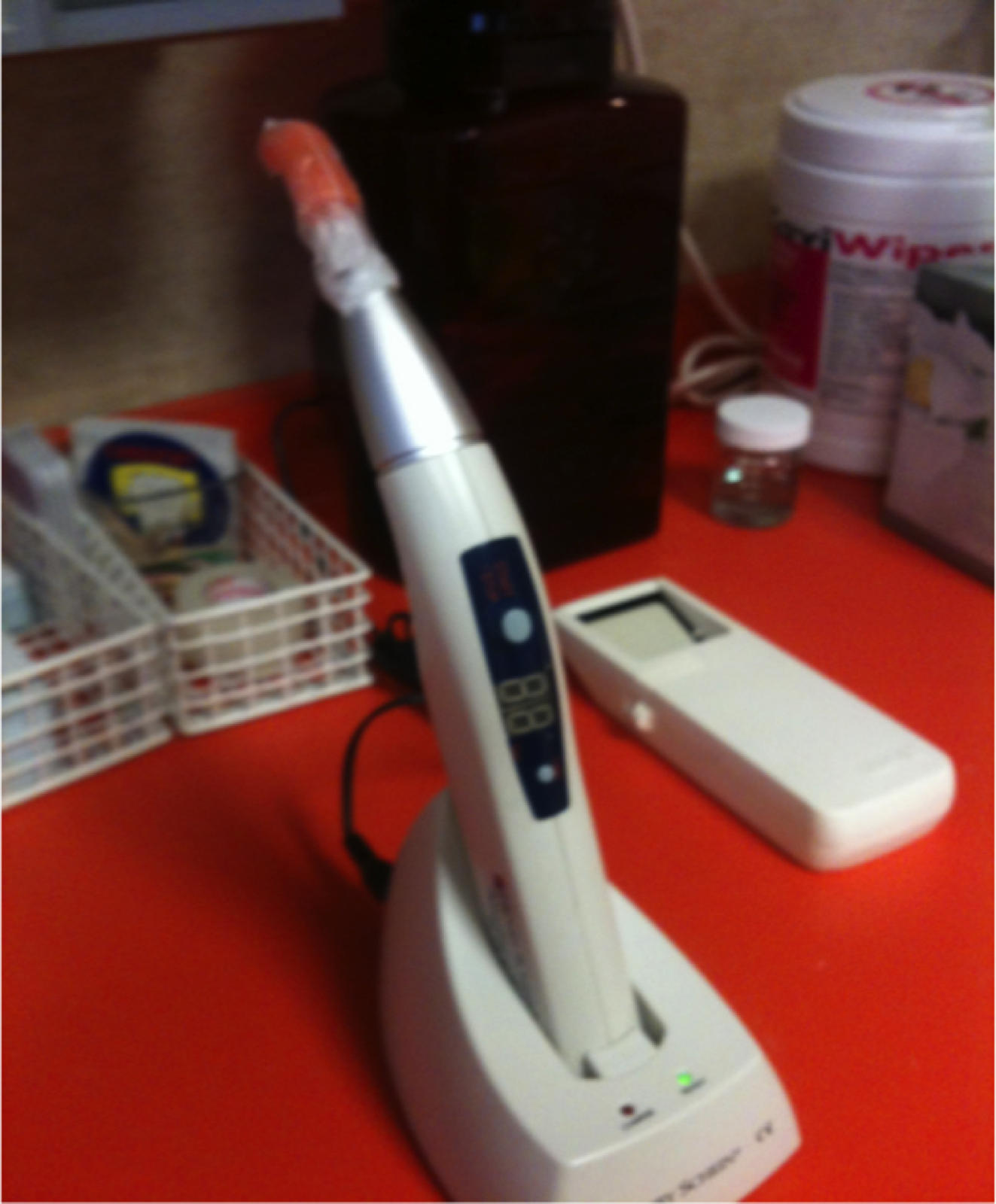
The curing light guidance applies to devices under product code EBZ, including broad beam and monochromatic light sources, and excludes polymerization lasers and devices used only for tooth whitening. Its sections include:
- Labeling that states total radiant power output, maximum irradiance, peak wavelength, radiant exposure range, recommended distance and angle from the tooth, instructions for checking irradiance output, and warnings about thermal hazards.
- Bench testing of radiant power output to ISO 10650, including irradiance measured at the light guide tip and an irradiance attenuation plot from 0 to 10 mm.
- Heat generation data showing that the temperature of the device body and tip stays within the limits of IEC 80601-2-60 under normal and single fault conditions.
- Reprocessing, biocompatibility, software, cybersecurity, electrical safety and wireless technology information.
The cybersecurity section notes that curing lights contain software or firmware and can connect to the internet directly or indirectly. Both documents also describe when a change to a cleared device requires a new 510(k) and refer to predetermined change control plans. The FDA said comments on either guidance may be submitted at any time, under dockets FDA-2024-D-2511 and FDA-2024-D-2512.
Sources
- Dental Composite Resin Devices and Dental Curing Lights—Premarket Notification (510(k)) Submissions; Guidances for Industry and Food and Drug Administration Staff; Availability, Federal Register, September 2, 2026
- Dental Composite Resin Devices – Premarket Notification (510(k)) Submissions, U.S. Food and Drug Administration, September 2, 2026
- Dental Curing Lights – Premarket Notification (510(k)) Submissions, U.S. Food and Drug Administration, September 2, 2026