FDA Early Alert Flags Air Bubbles in B. Braun Dialysis Bloodlines After Tubing Resin Change
B. Braun is telling customers to use its Streamline and B3 bloodlines only when no alternative is available, after testing found bubbles forming on the inside of the arterial line.

Key points
- The FDA issued an Early Alert on March 25 about six B. Braun Streamline Airless System and B3 Low Volume hemodialysis bloodline products.
- B. Braun's preliminary testing found a tubing resin change led to small air bubbles adhering inside the arterial bloodline, typically starting about 60 minutes into treatment.
- As of March 20, B. Braun had not reported any serious injuries or deaths associated with the issue, according to the FDA.
The US Food and Drug Administration has issued an Early Alert about certain B. Braun Medical hemodialysis bloodlines after the company's preliminary testing found that a change to the tubing resin led to small air bubbles sticking to the inside of the arterial bloodline, according to the FDA's alert dated March 25, read in that version via the Internet Archive. The American Hospital Association reported the alert to its members the same day.
The Center for Devices and Radiological Health issues Early Alerts "to notify the public of a potentially high-risk device issue," the notice says. The FDA said it is reviewing information about the issue and will update the page as significant new information becomes available.
Six bloodline products
B. Braun has sent customers an Urgent Medical Device Correction recommending that the affected Streamline Airless System Hemodialysis Bloodlines and B3 Low Volume Bloodlines be used only if no alternative is available, the FDA said. The alert lists six products: two B3 low-volume sets with different pump segments, Streamline sets described as "Streamline Fresenius for DaVita" and "Streamline Bloodline Long Version, FMC," and two Streamline bloodline sets for Dialog machines.
The FDA's first recommendation is to use alternate dialysis equipment. For customers without access to alternatives who need to treat patients, B. Braun's March 19 letter tells users to follow the bloodline and dialysis machine instructions for use in full, avoid high flow and retrograde rinseback if small air bubbles are present, inform all relevant staff and post the correction notice where the products are stored.
How the bubbles form
According to the alert, the bubbles result from degassing of blood on the arterial side of the blood pump because of negative pressure in the tubing, in the segment between the patient connector and the pump; they are not drawn in from outside. With the previous resin, such bubbles stayed in the blood and were compressed or dissolved by positive pressure after the pump. With the new resin, they adhere to the inside of the line and may gather into larger bubbles, a process that normally begins about 60 minutes into treatment, the FDA said.
Bubbles detected in the line may delay treatment while the set is replaced, and if the set is not replaced, treatment may be less efficient. If the machine's safety air detector senses the bubbles, it will alarm and stop treatment automatically. The FDA said patients may experience moderate blood loss if it is not clinically feasible to return blood in the extracorporeal circuit, and that in some patients blood loss "may lead to life-threatening adverse events, including death."
As of March 20, B. Braun had not reported any serious injuries or deaths associated with the issue, according to the FDA.
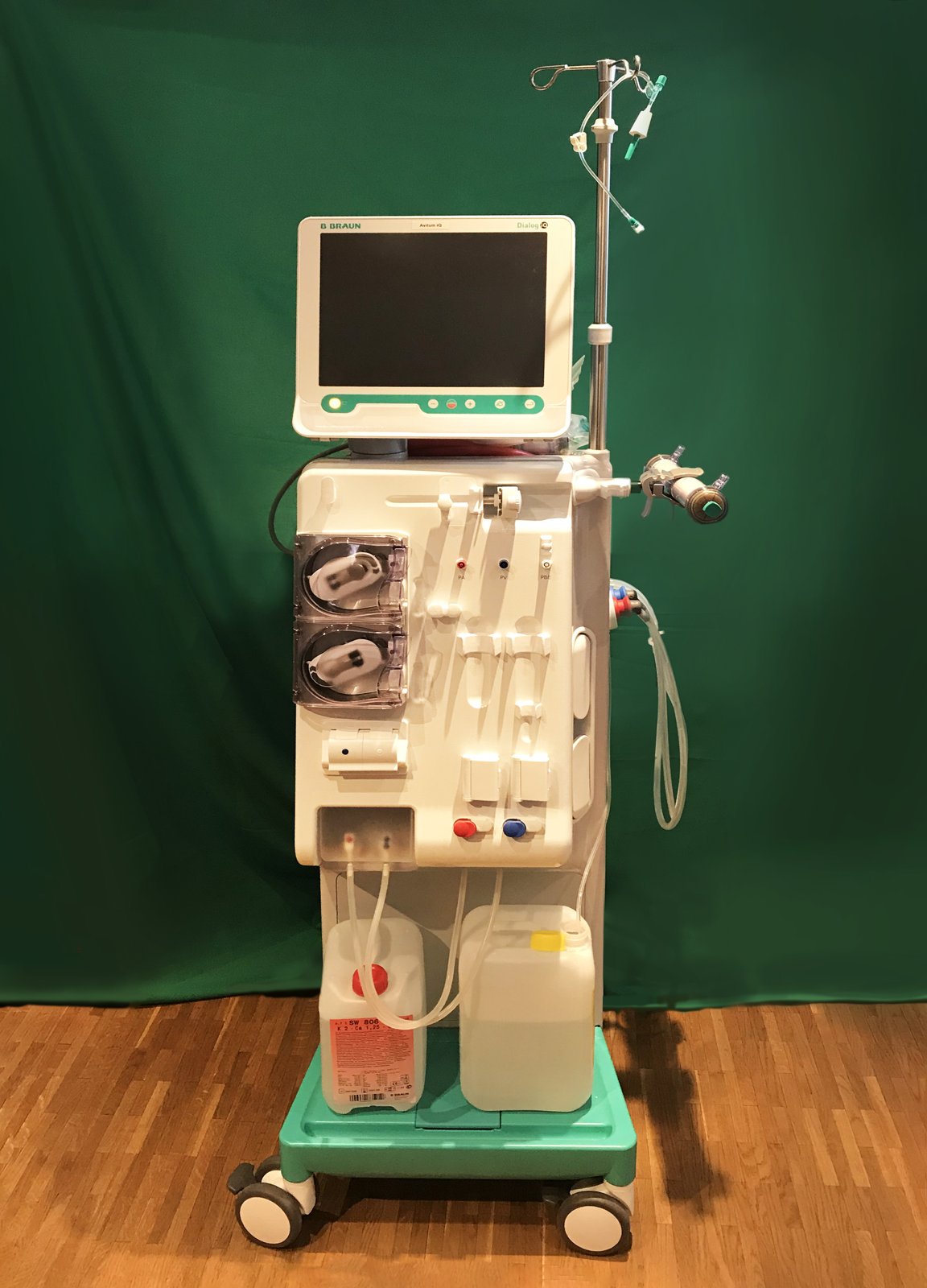
Bloodline tubing sets carry blood between a patient's vascular access device and the hemodialyzer during hemodialysis, the notice says.
Sources
- Early Alert: Bloodline Set for Hemodialysis Systems Issue from B. Braun Medical Inc., US Food and Drug Administration, read via Internet Archive (snapshot of 2026-03-25), March 25, 2026
- FDA issues early alert for certain dialysis devices from B. Braun Medical, AHA News, March 25, 2026