Court Rules FDA Misread Minimal Manipulation Rule in Vitti Labs Umbilical Tissue Case
A Missouri federal judge vacated the FDA's decision that Vitti Labs' CORDGRAFT must be regulated as a biologic and told the agency to consider the tissue's value to recipients.

Key points
- Chief Judge Brian C. Wimes of the Western District of Missouri granted Vitti Labs summary judgment on March 18, finding the FDA's reading of its minimal manipulation rule plainly erroneous.
- The FDA had concluded that an umbilical cord's only original relevant characteristic is its function as a blood conduit and that CORDGRAFT should be regulated as a biological product.
- The court vacated that decision and remanded it, telling the FDA to consider functions of the donor tissue that might aid a recipient; Vitti Labs announced the ruling on March 27.
A federal judge in Missouri has ruled that the US Food and Drug Administration misread its own "minimal manipulation" regulation when it refused to classify Vitti Labs' umbilical cord tissue product CORDGRAFT as a lower-risk Section 361 human tissue product, vacating the decision and sending it back to the agency, according to a Vitti Labs release distributed on March 27 and the court's order, read in a copy posted by the company's lawyers, Keller and Heckman.
Chief Judge Brian C. Wimes of the US District Court for the Western District of Missouri granted Vitti Labs' motion for summary judgment and denied the government's cross-motion in an order dated March 18. The FDA's "interpretation of 21 C.F.R. § 1271.3(f)(1) is plainly erroneous and its decision with respect to CORDGRAFT is reversed and vacated," the order says.
What was at stake
Human cells, tissues, and cellular and tissue-based products (HCT/Ps) regulated solely under Section 361 of the Public Health Service Act do not require FDA premarket review and approval, the order notes. To qualify, a product must meet four criteria, the first being that it is minimally manipulated. For structural tissue, the regulation defines that as processing that does not alter the original relevant characteristics of the tissue "relating to the tissue's utility for reconstruction, repair, or replacement."
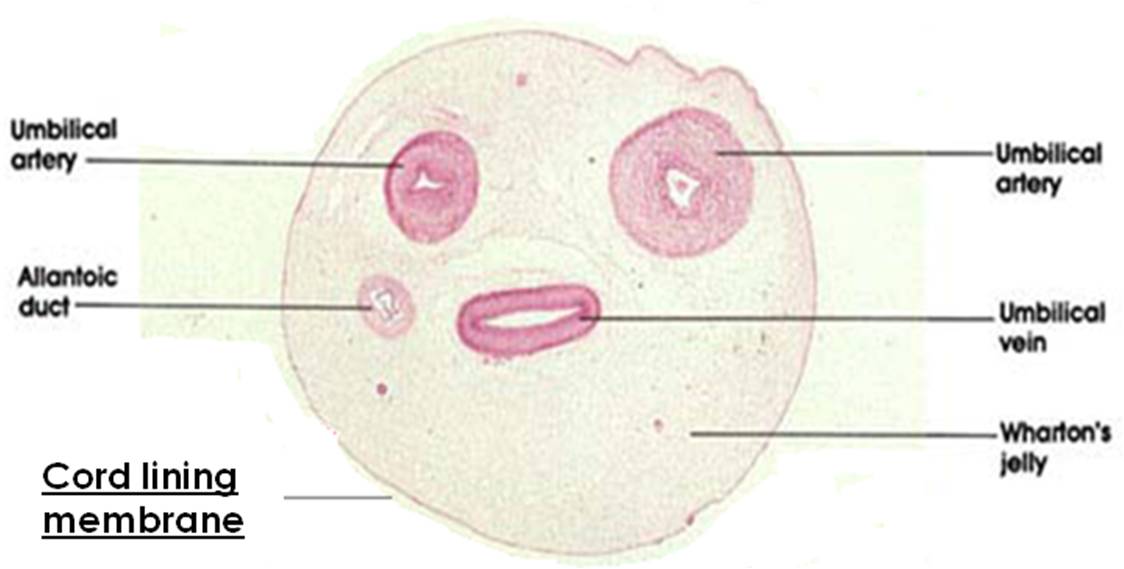
Vitti Labs makes CORDGRAFT by cutting umbilical cord open lengthwise, removing the arteries and vein and cutting the remaining tissue, which includes Wharton's jelly, into small pieces, according to the order. The product is not in commercial distribution. The FDA concluded in 2024, and affirmed on reconsideration, that the only original relevant characteristic of an umbilical cord is its function as a conduit for blood flow between mother and fetus, that this was more than minimally manipulated, and that CORDGRAFT should be regulated as a biological product under Section 351, the order says.
The court's reasoning
The court held that because reconstruction, repair or replacement occurs only in a recipient, the relevant characteristics are those of the tissue in the donor that may be useful to a recipient. "The entire regulatory scheme for HCT/P's revolves around sending safe products to patients, so it would not be logical to cut out consideration of recipients in the minimal manipulation analysis," Judge Wimes wrote.
The court rejected the government's argument that this reading would turn the minimal manipulation test into an effectiveness review, noting that the Section 361 process already considers function in the recipient under the homologous use criterion. The FDA is instructed to reconsider its conclusion "consistent with the understanding that original relevant characteristics of structural tissue include the functions of the tissue in the donor that might aid a recipient," the order says.
Vitti Labs said the FDA position it challenged "would have severely limited the Company's ability to offer new umbilical cord-based Section 361 HCTP/s." Philipp R. Vitti, the company's chief science officer, called the decision "an important victory for Vitti Labs and the entire Section 361 HCT/P industry."
The ruling remands the matter to the FDA for further consideration. Neither the release nor the order includes a statement from the FDA on the ruling.
Sources
- Vitti Labs Prevails in Lawsuit Against FDA Over "Minimal Manipulation" Criteria for Section 361 HCT/Ps, Vitti Labs (PR Newswire), March 27, 2026
- Vitti Labs, LLC v. U.S. Food and Drug Administration, No. 4:25-cv-00011-BCW, Order (W.D. Mo. Mar. 18, 2026), copy posted by Keller and Heckman, US District Court for the Western District of Missouri, March 18, 2026