Senators Press FDA Nominee Heidi Overton on Independence at Confirmation Hearing
The White House aide told the Senate HELP Committee she would follow statutory review standards and look at every FDA advisory committee rather than shut any down.
Key points
- The Senate HELP Committee held its confirmation hearing on Heidi Overton's nomination as FDA commissioner on September 24.
- Overton said individual product decisions belong to FDA under statute and that she would take the recommendations of career reviewers.
- The committee has not yet voted; questions for the record were due by 5 p.m. ET on September 25.
Heidi Overton, President Donald Trump's nominee to lead the US Food and Drug Administration, faced questions from senators of both parties on Thursday about political pressure on the agency, the future of its advisory committees and how fast it should review new products, at her confirmation hearing before the Senate Health, Education, Labor and Pensions (HELP) Committee.
If confirmed, Overton would replace Martin Makary, who resigned as commissioner in May, Healio reported. She is deputy assistant to the president for domestic policy and previously served as chief policy officer and vice chair of the Center for a Healthy America at the America First Policy Institute. According to the Regulatory Affairs Professionals Society (RAPS), she completed a general surgery residency at Johns Hopkins University, where she also earned a PhD in clinical investigation.
Speed and product reviews
In her opening statement, Overton framed the job around the pace of FDA review. "President Trump's direction for me in this role … is to go fast," she said, as reported by RAPS. She added that "Slow and prohibitive requirements for cutting-edge therapies at the FDA means investment is increasingly flowing to China, who has found ways to do things faster and cheaper," and noted that China has overtaken the US as the top venue for clinical trials.
HELP Chair Bill Cassidy (R-La.) said in his opening remarks that the next commissioner should "eliminate unnecessary barriers in the FDA approval process for different products, while ensuring that the gold standard of review is maintained." He then asked what role the White House or the Department of Health and Human Services should play in product decisions.
"Policy priorities can be set by the president—and are set by the president—individual product reviews and determination should be, according to statute, under the purview of the FDA," Overton replied, according to RAPS. "I would take the recommendations of the career experts who are reviewing that."
Asked by Sen. Susan Collins (R-Maine) about products for rare diseases where large trials are hard to run, Overton pointed to the agency's plausible mechanisms pathway and said flexible, risk-based review determinations for small populations "should be formalized into policy."
Advisory committees and political pressure
Sen. Chris Murphy (D-Conn.) asked whether Overton would restore advisory committees, saying that 27% of all advisory boards had been eliminated since the president took office and that those remaining had met 72% less often, RAPS reported. Overton answered: "My goal would be to not shut down any advisory committees, but to look at all of them to make sure they are fulfilling their highest purpose, getting the best experts on providing recommendations," according to Healio. "I think it's careful wording that your goal will be to not shut down advisory committees. That's not a commitment," Murphy replied.
Much of the hearing turned on vaccines and the abortion drug mifepristone. Cassidy and Sen. Ed Markey (D-Mass.) pressed Overton on her presence when the president signed an executive order to split the combined measles, mumps and rubella (MMR) vaccine into separate doses. "The MMR vaccine is safe and effective," Overton told Cassidy, Healio reported. Asked what she would do if the president asked her to act against commitments she made to the committee, she said, "I would give him my best advice, and I would follow the statutory requirements for the role of FDA commissioner regarding individual product determinations for safety and efficacy."
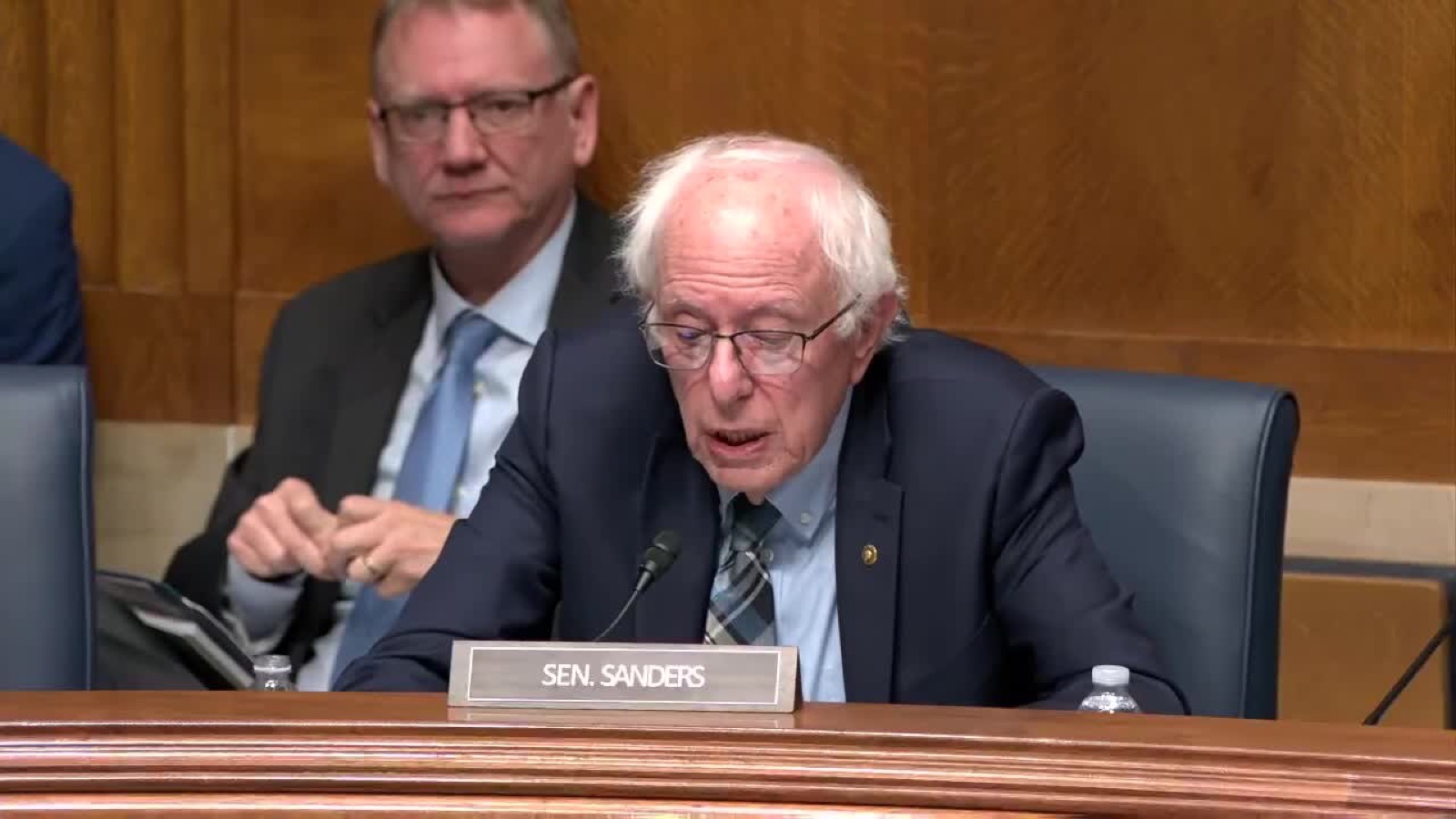
On mifepristone, Overton told Sen. Tammy Baldwin (D-Wis.) that the drug is safe and effective as labeled under its risk evaluation and mitigation strategy, and said an internal FDA safety review is under way. Sen. Bernie Sanders (I-Vt.) raised food safety, saying FDA's foreign food facility inspections are down by more than 35% compared with 2019.
What comes next
Cassidy gave senators until 5 p.m. ET on Friday, September 25, to submit additional questions for the record, Healio reported. The committee will then vote on whether to send the nomination to the full Senate, where Overton needs a simple majority. Republicans hold a one-seat majority on the committee. Former FDA commissioners Scott Gottlieb and Mark McClellan have backed her nomination in an opinion piece in STAT, according to RAPS.
Sources
- FDA nominee Overton faces grilling in Senate confirmation hearing, RAPS, September 24, 2026
- Senate committee questions FDA commissioner nominee Heidi Overton, MD, Healio, September 24, 2026