Philips Details $33.7 Million ARPA-H Project to Automate Stroke Clot Removal
The award is one of several under a federal robotics program worth up to $175.3 million that aims to bring thrombectomy to hospitals without stroke specialists.
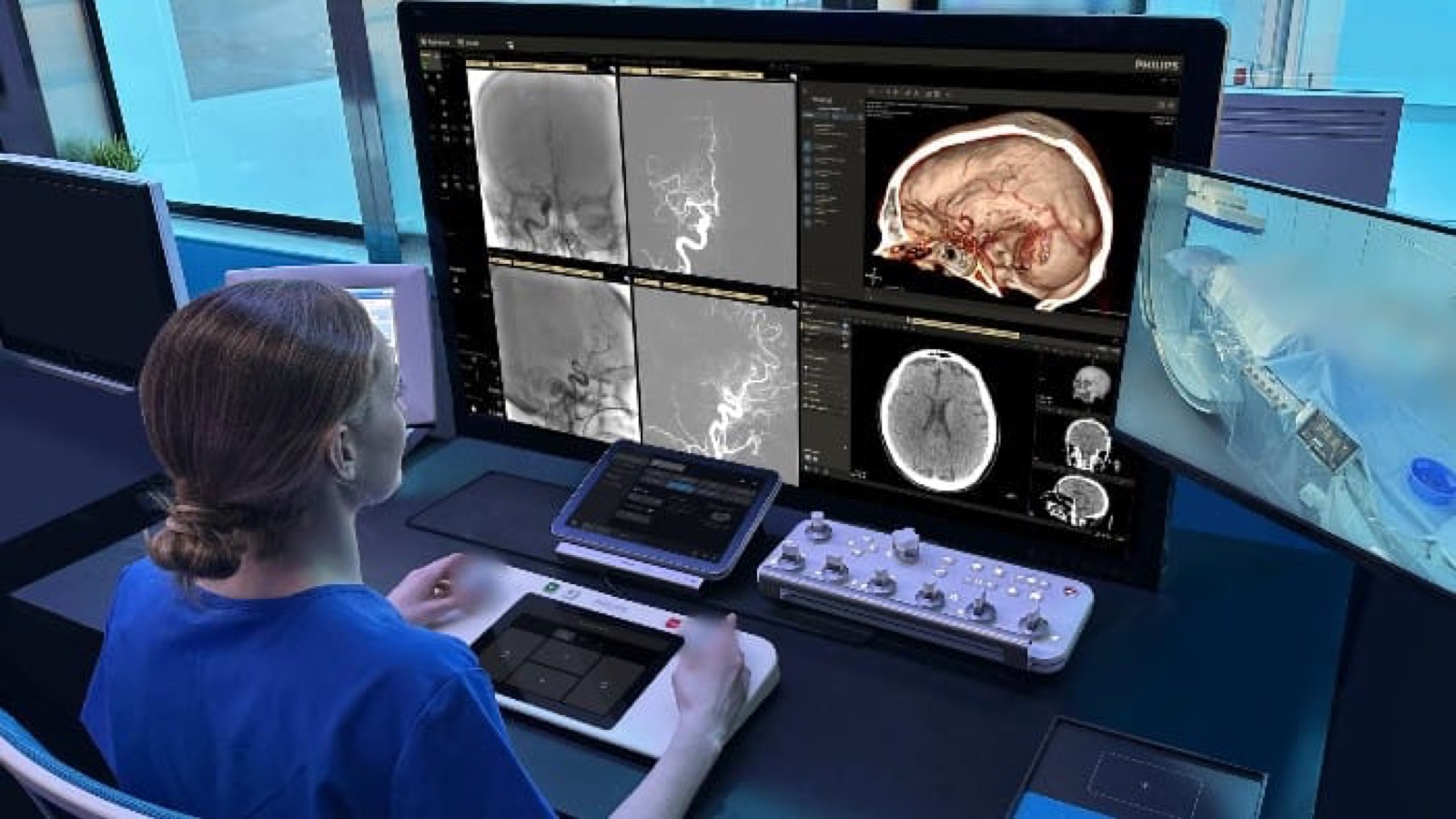
Key points
- Philips said it received an award of up to $33.7 million from ARPA-H's Autonomous Interventions and Robotics program for AI-enabled robotic stroke care.
- The project builds on Philips' Azurion image-guided therapy platform, with Johns Hopkins University and Boston University developing navigation and steerable catheters.
- ARPA-H's AIR program commits up to $175.3 million over five years; Siemens Healthineers, Magnendo and UC San Diego also received endovascular robot awards.
Philips has detailed its part in a federal program to develop autonomous robots for stroke treatment, saying it received an award of up to $33.7 million from the Advanced Research Projects Agency for Health (ARPA-H) to advance AI-enabled robotic procedure automation for clearing blood clots from the brain.
The award comes under ARPA-H's Autonomous Interventions and Robotics (AIR) program, led by program manager Ileana Hancu. Philips said it will develop technologies for remote-assisted and increasingly automated endovascular procedures, built on its Azurion image-guided therapy platform, with the aim of expanding access to mechanical thrombectomy.
The federal program
ARPA-H, an agency within the Department of Health and Human Services, announced the AIR contract awards on August 6. The agency's commitment is up to $175.3 million over five years, and awards are contingent on each team meeting accelerated research milestones; at 24 months, teams are to demonstrate autonomous capabilities, according to ARPA-H.
The agency said only about 12% of people who need thrombectomy receive it, and that for half of Americans an advanced care center is more than an hour away. "Through AIR, ARPA-H is mobilizing the nation's most advanced technological and clinical expertise to revolutionize surgical care and develop curative stroke treatments for patients," Hancu said in the agency's announcement.
Four teams received awards to build endovascular stroke robots: Siemens Healthineers, Philips North America, MIT spinout Magnendo and the University of California, San Diego, MedTech Dive reported. Siemens Healthineers will receive up to $31.1 million and contribute $5.4 million of its own, and Magnendo will get up to $32 million, according to MedTech Dive. Stryker, which has a partnership with Siemens Healthineers on robotic neurovascular interventions, is a subrecipient on that project. ARPA-H also funded Kitware to build a shared simulation and validation testbed, and Stanford University and the University of California, Berkeley for microbot work.
Philips' approach
According to ARPA-H, the Philips team will combine existing image-guided therapy infrastructure with a multi-channel, fluid-driven steerable catheter and imitation learning algorithms. Philips said Johns Hopkins University will develop autonomous device navigation and Boston University will develop steerable catheters, with J Mocco, chair of neurological surgery at Weill Cornell Medicine, as a clinical collaborator.
"The goal is not to replace expertise, but to make expertise scalable and accessible," said Bert van Meurs, chief business leader for image-guided therapy at Philips.
Kitware will receive up to $17.5 million for the testbed, which the robots, including Philips', will use, MedTech Dive reported after Philips released its details on August 26. ARPA-H said all data and software from that work will become publicly available.
Philips said the technologies are under development and that any future clinical use or commercial availability will be subject to regulatory requirements. MedTech Dive noted that ARPA-H is among the federal agencies that have been a target of Trump administration research funding cuts.
Sources
- Philips selected for ARPA-H program to advance AI-enabled robotic stroke care, Philips, August 26, 2026
- ARPA-H funded teams to transform life-saving stroke interventions with autonomous robotic surgeries, ARPA-H, August 6, 2026
- Siemens Healthineers, Philips awarded ARPA-H funds for stroke robots, MedTech Dive, August 21, 2026
- Philips details $33.7M push to develop a stroke robot, MedTech Dive, August 27, 2026