FDA Grants De Novo to Ultrasound AI Software That Predicts Delivery Dates
Delivery Date AI creates a new Class II device type for software that estimates when a pregnancy will deliver from standard ultrasound images.
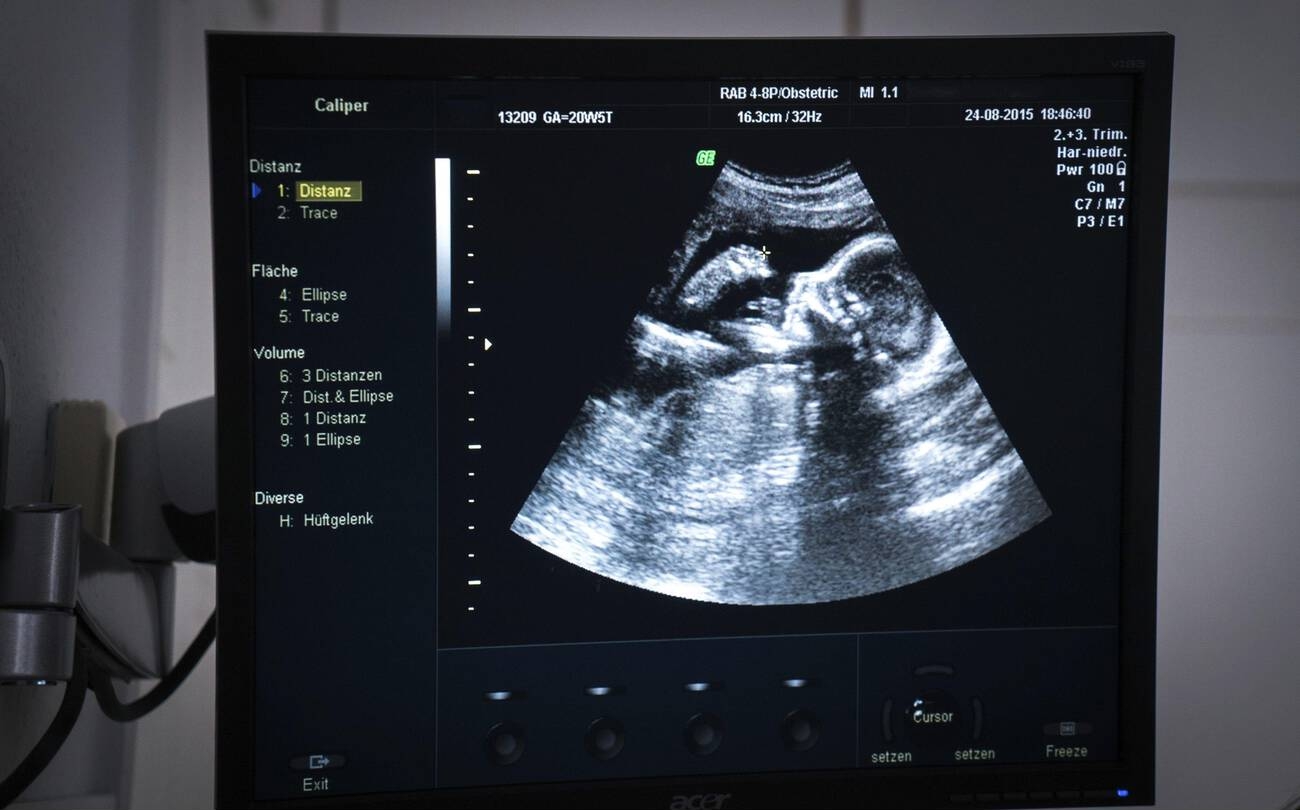

The FDA granted this device through the De Novo pathway, used for new low-to-moderate-risk device types with no existing equivalent.
Key points
- Ultrasound AI said the FDA granted De Novo classification to Delivery Date AI; the FDA order, DEN250007, is dated February 11, 2026.
- The prescription software gives a Predicted Delivery Date for singleton pregnancies from 14 to 36 weeks when no reliable due date exists, as an aid to clinical judgment.
- The company cites the PAIR study with the University of Kentucky, which trained the model on data from 5,714 pregnant women.
Ultrasound AI said on March 2 that the U.S. Food and Drug Administration has granted De Novo classification to Delivery Date AI, cloud-based software that analyzes standard pregnancy ultrasound images to produce a predicted delivery date for women whose due date cannot be reliably set by the usual methods, Contemporary OB/GYN reported.
The FDA's De Novo order, DEN250007, is dated February 11, 2026. It places the software in Class II under a new regulation, 21 CFR 892.8200, with the generic name "radiological software system for delivery date prediction" and product code SHE. The FDA received the request on March 17, 2025. A De Novo grant covers a new type of low-to-moderate-risk device that has no predicate on the market, and later devices of the same type can be cleared against it.
What the FDA authorized
According to the order, Delivery Date AI is prescription post-processing software that uses machine learning to analyze pregnancy ultrasound images and give clinicians a Predicted Delivery Date. It is meant for women 18 or older with a singleton pregnancy between 14 0/7 and 36 6/7 weeks of gestation who lack a reliable estimated delivery date.
The order lists three situations that define that group: an unreliable last menstrual period, for example because of irregular cycles or recent hormonal contraceptive use; no ultrasound before 14 weeks, which rules out a crown-rump length measurement; and a pregnancy confirmed to be within the indicated range by signs such as fundal height or a fetal heartbeat.
The order says the software "should be used as an aid in clinical judgment, alongside standard methods for assessing gestational age." In describing the new device type, the FDA states that the output "does not replace a clinician's review or judgment on the progression of a pregnancy" and that such a device "does not identify at-risk pregnancies or identify specific complications."
The evidence the company cites
Contemporary OB/GYN reported that the company points to the Perinatal Artificial Intelligence in Ultrasound (PAIR) study, published July 27, 2025, in The Journal of Maternal-Fetal & Neonatal Medicine and run with the University of Kentucky. The outlet said the model was trained on data from 5,714 pregnant women, covering 19,940 ultrasound exams and 877,141 images, with a validation group of 1,209 patients whose delivery outcomes were blinded from the AI by an independent monitor.
The outlet reported that the R2 value for all births rose from 0.85 in the first version of the software to 0.92 in the fourth. For spontaneous preterm birth, it said the early model showed a sensitivity of 39 percent and a specificity of 93 percent. Bunn is listed among the study's authors in the outlet's references. The FDA order does not cite these figures.
"Fetal development and delivery timing impact nearly every decision in obstetrics," said Nathan Fox, a maternal-fetal medicine specialist and partner physician with Ultrasound AI, in a statement quoted by the outlet.
Robert Bunn, the company's president and founder, said in the company's release, as quoted by Contemporary OB/GYN: "Delivery Date AI isn't just innovative; it's a clinically evaluated tool that helps clinicians reduce uncertainty and better support mothers and families."
How it fits into care
According to Contemporary OB/GYN, the software works with most existing ultrasound machines without new hardware: images are uploaded to the cloud and results come back within seconds. The company says the tool could be used in resource-limited clinics and in areas with little access to obstetric dating expertise.
The company did not announce pricing or name commercial customers in the coverage.
Sources
- De Novo order DEN250007: Delivery Date AI, U.S. Food and Drug Administration, February 11, 2026
- Ultrasound AI receives De Novo clearance for predictive delivery date technology, Contemporary OB/GYN, March 2, 2026