FDA Clears Qure.ai's qXR-Detect Chest X-Ray Software With a Change Control Plan
The detection aid flags suspicious regions on adult chest radiographs and sorts them into six anatomical categories; its clearance includes an authorized plan for future algorithm updates.
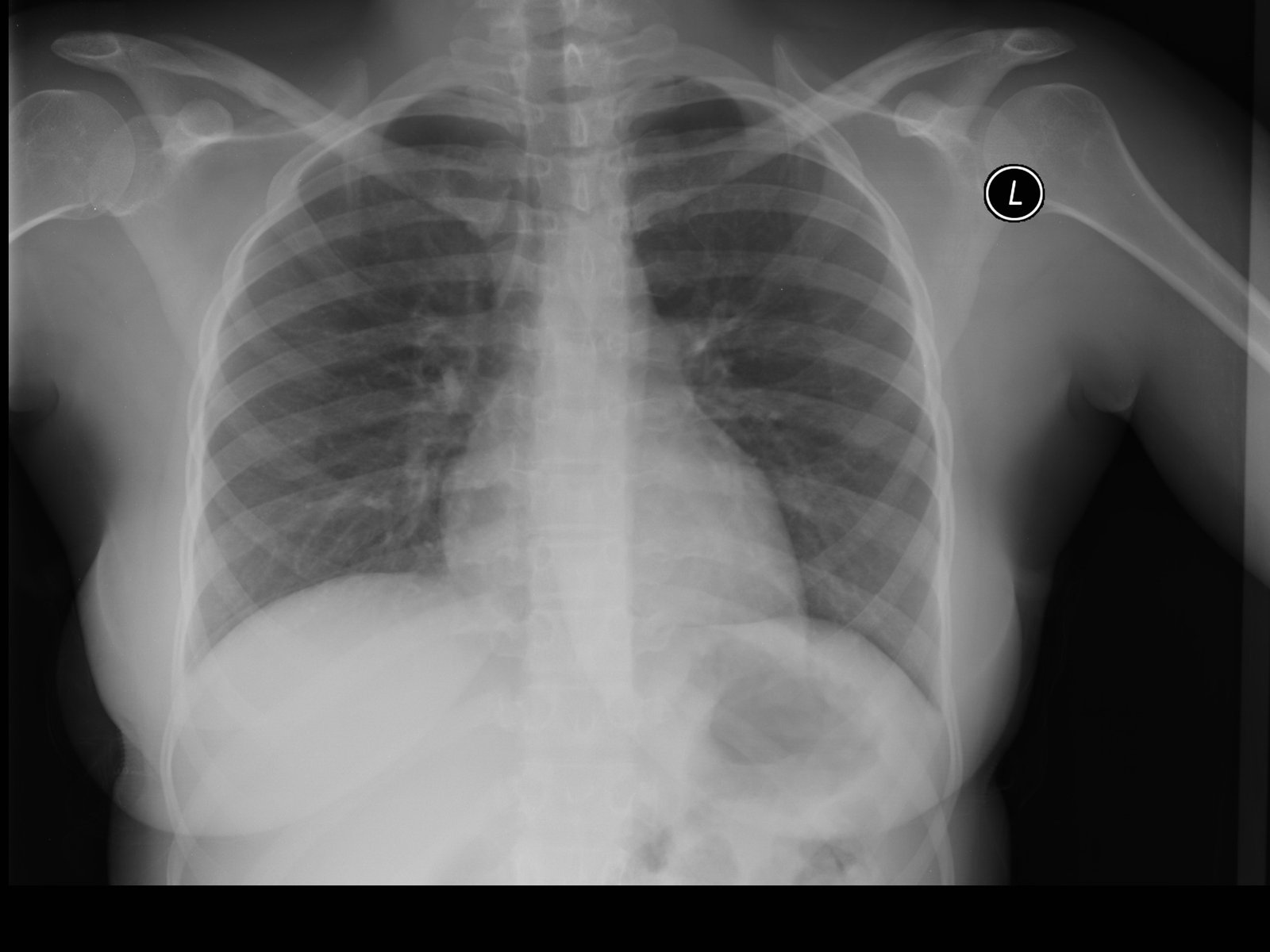

The FDA cleared this device through the 510(k) pathway, which finds it substantially equivalent to a device already on the market. Clearance is not the same as approval.
Key points
- FDA records list qXR-Detect as 510(k) K251934, found substantially equivalent on January 16, 2026, with a predetermined change control plan authorized; Qure.ai announced it on February 26.
- The software highlights suspicious regions on adult chest X-rays and assigns each to lung, pleura, mediastinum/hila/heart, bone, hardware or other, as a concurrent reading aid.
- In an 18-reader study of 301 cases described in the FDA summary, readers' AUC rose from 0.8466 unaided to 0.8720 with the software.
Qure.ai said on February 26 that the U.S. Food and Drug Administration has given 510(k) clearance to qXR-Detect, computer-assisted detection software that flags suspicious regions on plain chest X-rays for emergency physicians, family medicine practitioners and radiologists, in a press release. The company said the clearance brings its total of FDA-cleared indications to 26 across nine products for X-ray and CT.
The FDA's 510(k) database lists qXR-Detect as K251934, a traditional 510(k) from Qure.ai Technologies of Mumbai, received on June 24, 2025 and found substantially equivalent on January 16, 2026, under product code MYN. The record shows a predetermined change control plan was authorized.
What was cleared
According to the clearance letter and 510(k) summary, qXR-Detect analyzes chest radiographs, highlights suspicious regions of interest and assigns each to one of six categories: lung, pleura, bone, mediastinum and hila and heart, hardware, and other. It is intended as a concurrent reading aid and is indicated for adults only. The predicate is Imagen Technologies' Chest CAD (K210666).
The clinical study in the summary was a multi-reader, multi-case study of 301 cases read by 18 radiologists, emergency physicians and family medicine practitioners, with a 28-day washout between unaided and aided sessions. The primary measure, a weighted localization score known as wAFROC, rose from 0.6894 unaided to 0.7505 aided (p < 0.001), and false positives per image fell from 0.4182 to 0.3300. Reader AUC rose from 0.8466 to 0.8720, sensitivity from 0.8896 to 0.9338 and specificity from 0.5556 to 0.6219, the summary reports.
Planned updates without new filings
The FDA letter says its review covered the change control plan, which lets modifications described in the plan be made without a new 510(k), provided they follow it. The summary lists two planned modifications and says the algorithm will not learn continuously; each change will be trained, tested and locked before release, with users told through updated instructions for use.
Samir Shah, Qure.ai's chief medical officer, said the plan “will help assure US health system customers access to the most up-to-date version of the algorithm as models and architecture evolves.” The company said qXR-Detect is the only chest X-ray detection device cleared by the FDA with such a plan; Diagnostic Imaging reported the plan as part of the clearance.
Amit Gupta, division chief of cardiothoracic imaging at University Hospitals Cleveland Medical Center, said in the release that the tool's bounding boxes and region labels help “the interpreting radiologist quickly understand where and why an alert has been generated.”
Sources
- Qure.ai nets six new indications cleared by the FDA, taking the chest X-ray crown in the radiology AI race, Qure.ai, February 26, 2026
- 510(k) Premarket Notification K251934: qXR-Detect (page as updated 11/02/2026; facts cited were in the January 16, 2026 decision record), U.S. Food and Drug Administration, January 16, 2026
- K251934 clearance letter and 510(k) summary, qXR-Detect, U.S. Food and Drug Administration, January 16, 2026
- FDA Clears Emerging AI-Powered CXR Software from Qure.ai, Diagnostic Imaging, February 26, 2026