AI ECG Model Flags Sudden Cardiac Death Risk Missed by Ejection Fraction, Study Says
A deep-learning model trained on more than 440,000 Swedish ECGs identified a high-risk group with a 7.0% annual rate of sudden cardiac death; most of those patients would not have been flagged by the standard heart-pumping measure.
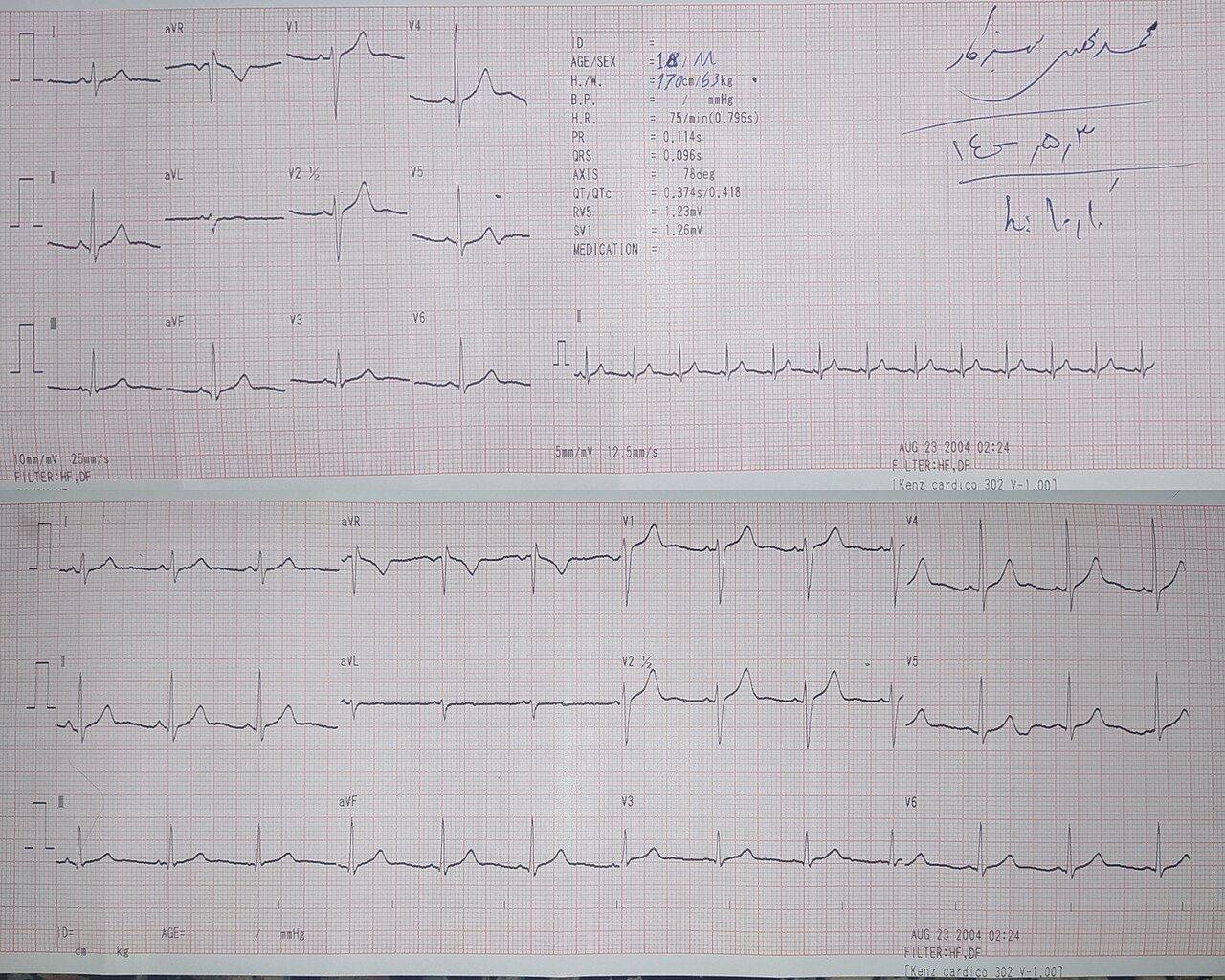

Key points
- Researchers led by UC Berkeley's Ziad Obermeyer reported in Nature on June 24, 2026, that an ECG-based deep-learning model isolated 2.2% of patients with a 7.0% annual sudden cardiac death rate.
- Patients with reduced left ventricular ejection fraction, the standard risk marker, made up 1.9% of the sample and had a 4.6% annual rate; 86.1% of the model's high-risk patients were not flagged by it.
- The paper reports external validation in a U.S. health system and a Taiwanese hospital registry; the model is a research tool, not an FDA-authorized device.
A deep-learning model that reads standard electrocardiograms identified patients at high risk of sudden cardiac death more effectively than left ventricular ejection fraction, the measure doctors now rely on, according to a study published in Nature on June 24 by researchers at UC Berkeley and collaborators. The model is a research tool and has not been authorized by the FDA.
The authors, Ziad Obermeyer, Alexander Schubert, James Ross, Sendhil Mullainathan and Markus Lingman, trained the model on a dataset linking all ECGs in one Swedish region to death certificates. The main analyses were run on a held-out set of 119,541 ECGs from 35,885 patients, the paper says; the full dataset included more than 440,000 ECGs, according to UC Berkeley's announcement.
What the model found
The model isolated a high-risk group making up 2.2% of the sample, with a 7.0% annual rate of sudden cardiac death, the paper says. Patients with reduced ejection fraction made up 1.9% of the sample and had a 4.6% annual rate. Of the patients the model rated high risk, 86.1% were not flagged by ejection fraction.
The authors wrote that high-risk patients who had defibrillators implanted were 54.4% less likely to die than expected, which they said suggests a mortality benefit. They reported validating the model externally in a U.S. health system, where it predicted ventricular arrhythmias that cause sudden death, and in a Taiwanese hospital registry, where it predicted future arrhythmic cardiac arrests. The university said the validation used two years of deidentified ECGs from a hospital system in San Diego and a separate dataset from Taipei.
The researchers paired the predictive model with a generative model of the ECG waveform to visualize the pattern it had detected. They describe the result as a biomarker that is easily visible and robustly predicts sudden cardiac death but had not, to their knowledge, been described before.
Why ejection fraction falls short
Ejection fraction, the share of blood the left ventricle pumps out with each beat, is the only predictive biomarker in wide use, the paper says, and it misses most sudden cardiac deaths while flagging many low-risk patients for defibrillators that never fire.
"One thing that makes the problem very tragic, but also very well suited for AI, is that we have the cure for this problem," Obermeyer said in the university's release. He described the data behind the study as hard to obtain, adding: "It's a big part of why there's so little clinical AI in use today."
Obermeyer is working with health systems in Sweden, Taiwan and the U.S. to run the algorithm on hospital ECG databases, the university said; patients whose scans are flagged as high risk would be offered a patch that continuously monitors the heart. HCPLive reported on the study on June 29.
Sources
- An ECG biomarker for sudden cardiac death discovered with deep learning, Nature, June 24, 2026
- With AI, researchers discover new way to detect sudden cardiac death risk, UC Berkeley News, June 24, 2026
- New AI Tool May Effectively Predict Sudden Cardiac Arrest Risk in Otherwise Healthy Patients, HCPLive, June 29, 2026